
China
The trip to China came as unexpectedly as possible. I've always associated this country with difficult access and lots of paperwork before entering. I would never have thought that I'd go there this year — and especially not with my girlfriend, Agatka. At the beginning of autumn 2024, our holiday plan was the far north of Norway — hiking around the Lofoten Islands and camping for 10 days. When summer started the idea of other destinations begin to take root in our minds. I was struggling to find cheap flights for July/August (which is no easy task), and the first idea was Panama. I got pretty excited about it, but Agatka wasn't sure; she preferred something with a more Asian vibe. Then one winter morning, while looking at a map, I casually said — China. Agatka really liked the idea, so I had to check flights, and to my surprise, they were reasonably priced. I hesitated for a moment, wondering if it would be too difficult and complicated, but then I remembered that Poland received visa-free entry to China until the end of 2025. It turned out I didn't have to fill out any paperwork and could simply enter the country just like that. That was the trigger, and shortly after, we bought tickets to the unknown.
Before we knew it, July had arrived and we were already on the train to Warsaw. I was happy, because just four days earlier I had finished my studies and passed my bachelor's exam, so I was travelling with a clear mind. In Warsaw, we spent the night at a friend's place, and in the morning we headed to the airport. We had a very comfortable flight with Etihad — I hadn't flown that pleasantly in a long time. After a short layover in Abu Dhabi and a second flight, we finally landed in Beijing. We were a bit stressed about what everything would look like once we arrived. It turned out that the airport procedures were no different from the standard process in any other country. The only new thing was that we had to scan our fingerprints on a special machine before approaching passport control. We left the airport quickly and without any major issues. We caught the metro right away and headed to the hotel.
Beginnings in Beijing
When we came up from the metro, we were immediately hit by intense humidity. Since Beijing is on a similar latitude to Poland, we thought it wouldn't be that hot — but we were wrong. Our hotel was relatively close to the Forbidden City and the city center, although considering the scale of Chinese cities, it was still quite a distance. All around us was classic old Beijing architecture — low, single-story grey-brick houses separated by narrow alleyways, forming one huge maze. We left our luggage at the hotel and went straight out to get something to eat. Since Western internet doesn't work in China, we had no access to Google Maps (which don't work well there anyway), so we used Amap instead. We found a restaurant with good reviews. As soon as we walked in, there was a burst of commotion — five waiters and waitresses rushed over, all trying to tell us something in Chinese. At that point, we still didn't realize how difficult communication in this country would be (I didn't expect English to be THAT rare). We didn't really understand the menu, but luckily there was one customer who — by some miracle — could speak fairly good English. He explained to us that this was a restaurant specializing in what's called Hot Pot — raw lamb served with a special steaming pot, allowing the customer to decide when to take the meat out and how well it should be cooked. With this gentleman's help, we ordered some cooked and uncooked lamb and ate it with peanut sauce. It was delicious, but unfortunately not very filling. After this adventurous lunch, we went for a walk to a shop. The humidity was hard to bear, and on top of that, the constant roaring noise of the city overwhelmed us from every direction. It overstimulated us pretty quickly, especially since we weren't prepared for it, so we retreated to the hotel to rest for a few hours.
In the evening, once we had recovered, we took a bus and went to explore some nearby parks. First, we arrived at Beihai Park — a park with a huge lake right next to the Forbidden City. We ended up there by chance, simply because our bus happened to pass by it. The lake was so large that we didn't manage to walk all the way around it, but it didn't matter — along the way there were plenty of pavilions, temples, and other old traditional Chinese structures that we were able to explore in peace. Being a tourist in China can be very exhausting, because every major attraction is packed with enormous crowds — crowds that we Europeans can't even imagine. On top of that, at every attraction there are lots of young Chinese women dressed in traditional outfits, doing photo sessions in the prettiest spots. That's why we appreciated the side alleys where there were simply fewer people. Once we were satisfied, we left and walked to our next stop: Jingshan Park. It's a much smaller park, with a fairly high hill in the center that offers a view of the northern gate of the Forbidden City — the Gate of Divine Prowess — and the entire palace complex. The view was truly incredible, and the Forbidden City looked so huge that it was hard to believe all of it was once reserved only for the Imperial family. Finally, tired, we returned to our hotel, stopping on the way at another restaurant — which turned out to be a perfect choice. It was very close to our accommodation, had an easy-to-understand menu, and was extremely cheap — 6 USD for a filling dinner for two!!!

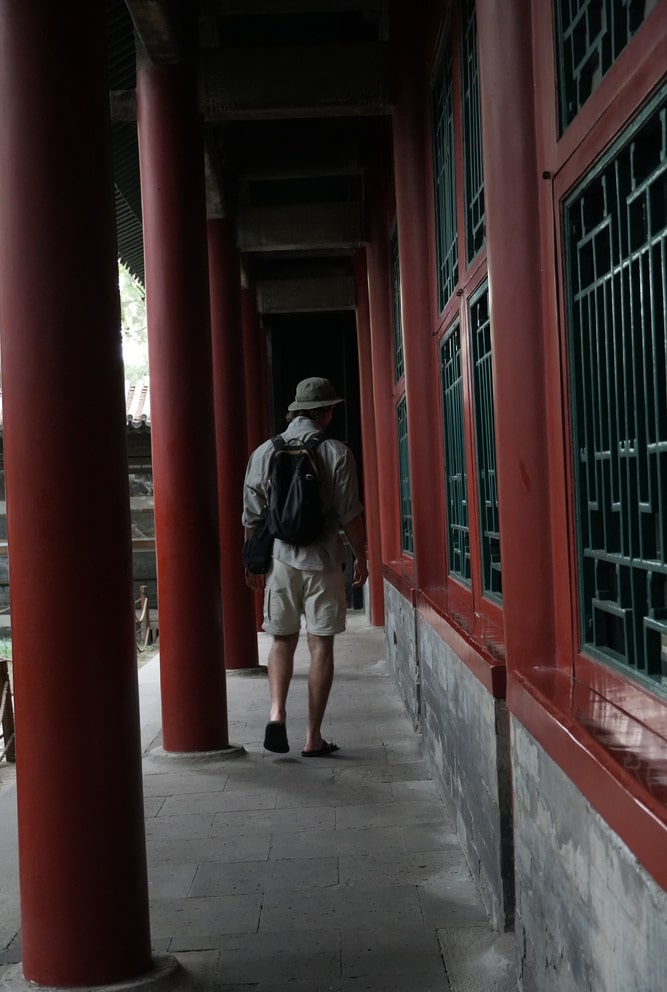
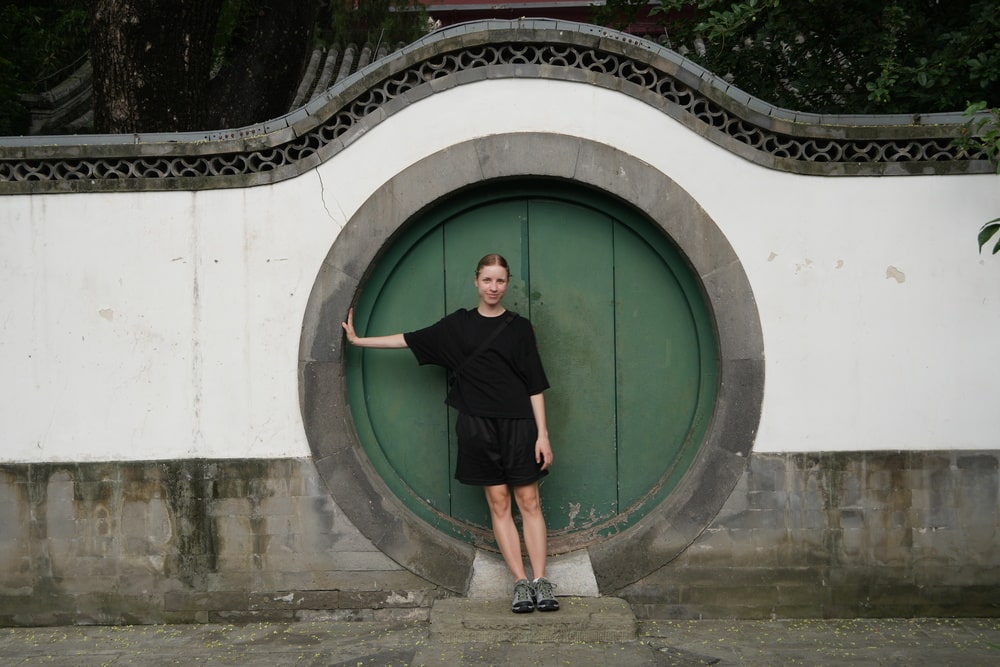
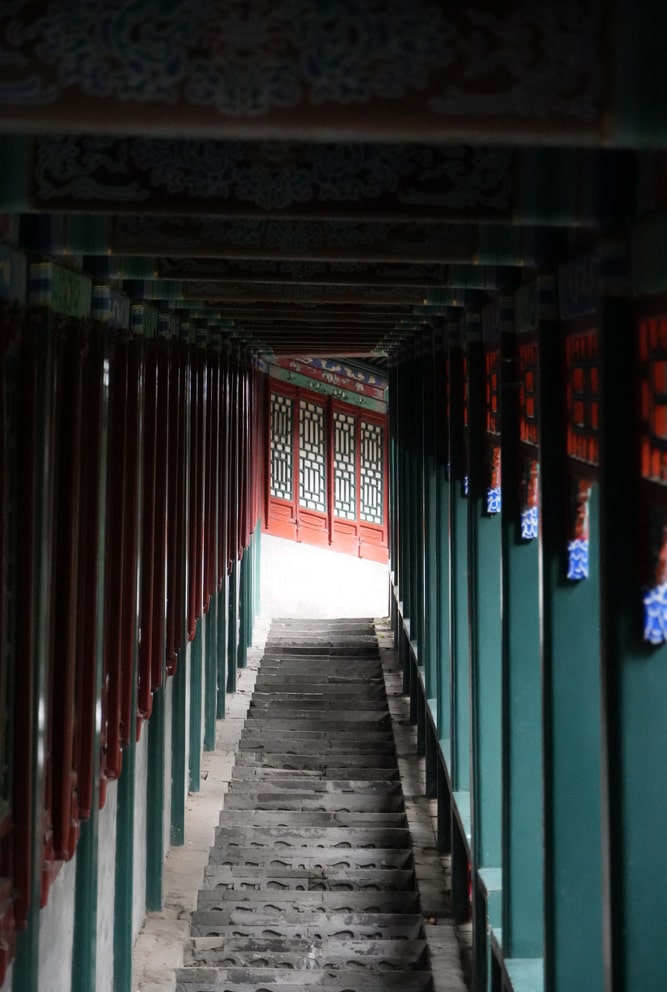
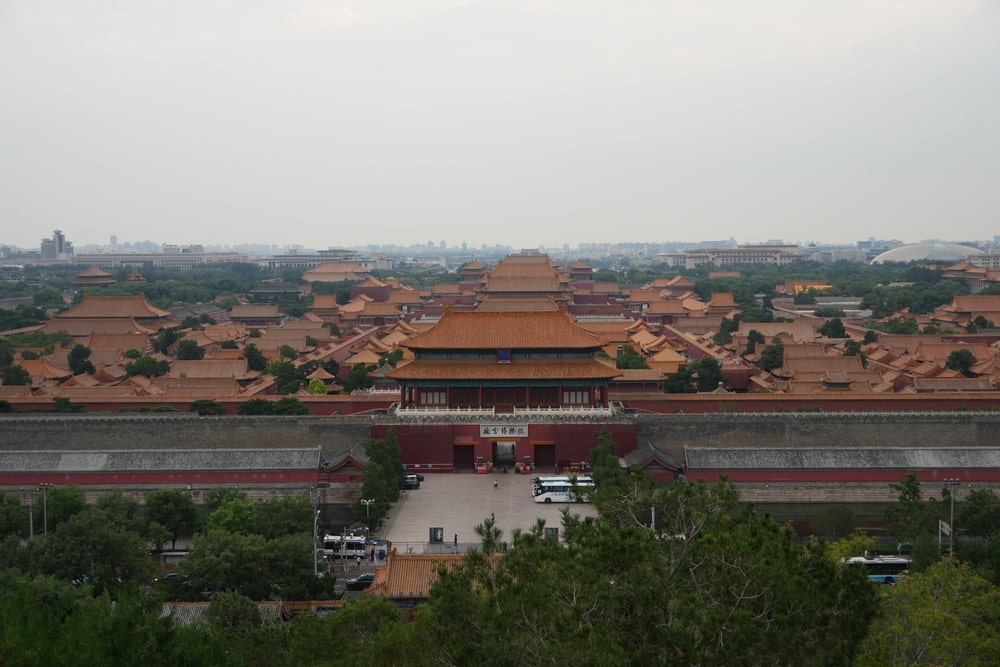
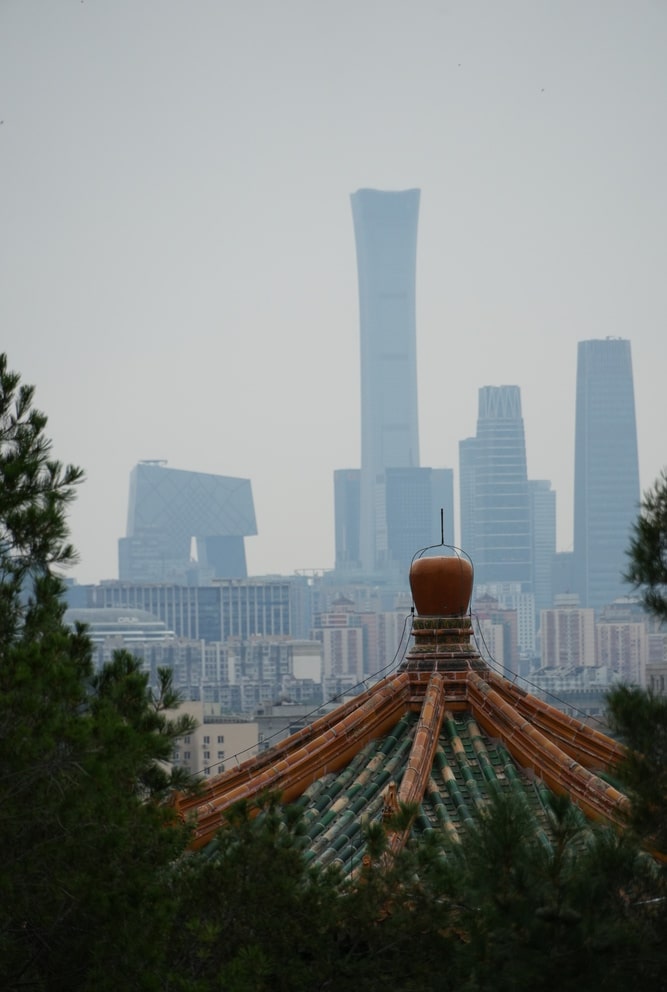 1-4) Beihai Park, 5-6) Views from Jingshan Park
The next day was exciting — we were going to the Great Wall of China. We left the hotel quite late and headed to the railway station, because we had read that there was one train that goes to the Wall. Unfortunately, we arrived at 1 p.m., and it turned out that trains don't run between 12 and 4 p.m. To avoid wasting the day, we quickly ordered a taxi. The ride was almost 1.5 hours, about 80 km, and it cost only 40 USD. We arrived at a place called Badaling, the most famous section of the Great Wall. We quickly bought our tickets and took the cable car up the mountain. The crowds at the main viewing area were overwhelming, but all it took was walking a few dozen meters further to find some peace and quiet. The Wall is incredibly long, and it's impossible to walk all of it — especially in the kind of humidity that hangs over the area. In some parts it's also extremely steep. We walked for about 30 minutes and then sat down to admire the views. The fortifications stretched all the way to the horizon. An interesting fact is that the so-called Great Wall of China doesn't look like the postcard version along its entire length. In some places it's just simple earthen embankments, and sometimes it's nothing more than a line of steep mountain ridges.

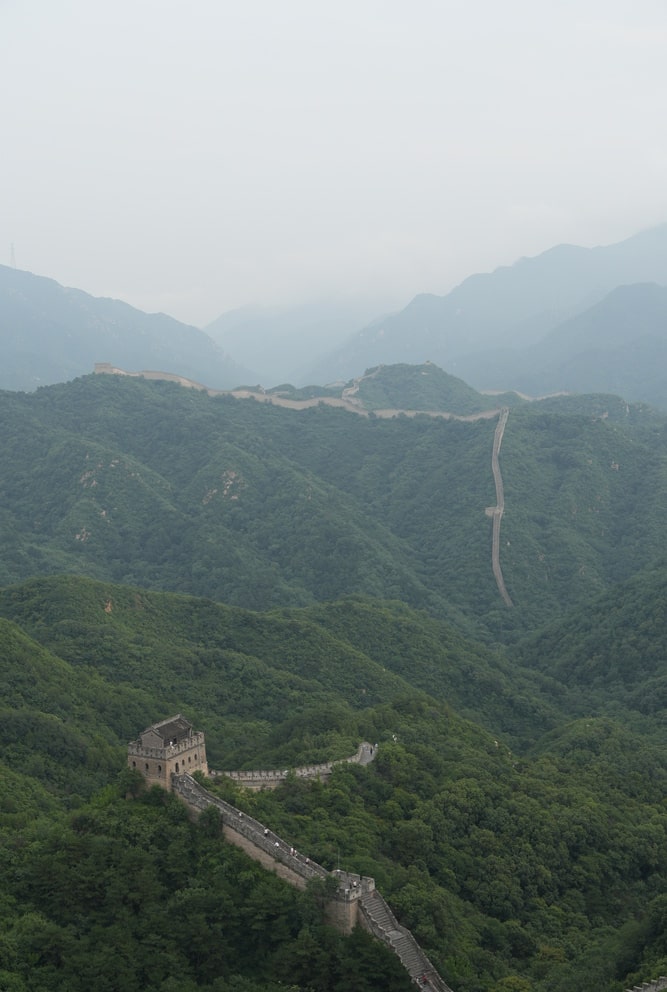
 The Great Wall of China
Once we felt satisfied with our visit, we took the cable car back down and caught a taxi back to the city. Since it was still early, we went to a shopping mall. There were lots of interesting shops and restaurants that don't exist in Europe. We went into Pop Mart — a store that sells various kinds of figurines in so-called blind boxes, including Labubu. We had a coffee and a matcha for a total of 5 USD. In the evening we returned to the hotel and started planning the rest of the trip. We had only bought train tickets to Shanghai, thinking we would travel spontaneously. However, it turned out that trains in China sell out very quickly, so we were forced to book everything in advance. We purchased all the necessary tickets for the next two weeks — trains, hotels, everything. In China, everything is cheap except for flights, trains, and European brands — those things cost just as much as in Europe. And that's how this beautiful day came to an end.
On our third day in Beijing, a heatwave arrived, and combined with the humidity it created a mix that was almost unbearable. Unfortunately, that was also the day we planned to visit the Forbidden City. But first, we took the metro to Tiananmen Square. To our surprise, we were checked by the police before we had even left the station. The stairs brought us right next to the square, but because of all the police barriers, it takes about 30 minutes of walking to actually reach the entrance. When we finally got there, the police officer gave us some sad news: to enter the square you need a reservation made at least one day in advance, so we couldn't go in. Not discouraged, we continued with our plan and headed toward the imperial palace. The Forbidden City, as the palace complex is known, is a massive combination of temples and residential buildings, built solely for the emperor and his family. In the past, entering its walls without permission was punishable by death — hence the name “forbidden.” We were able to buy tickets without any issues, including an audio guide in polish!!! Why did I mention the heat at the beginning? Because most of the Forbidden City is made up of vast stone courtyards where, in this kind of weather, people melt like cheese in an oven. The temperature was unbearable and it was difficult to focus on the monuments. We explored as much as we could, searching for indoor exhibitions to cool down for a moment — for example, the jade exhibit. The palace can be entered through several enormous gates that are truly impressive. Most of the complex consists of these huge courtyards with grand temples in the center. On the left side, there is a garden running alongside the courtyards, and on the right are various residential and utility buildings. To enter each courtyard, you pass through another small gate, each with its own name. Behind the temples are the living quarters, and at the very end of the city lies the imperial garden — relatively small compared to the scale of the palace, but filled with interesting ancient relics. We stayed in the garden until closing time, resting after the intense heat. After finishing our tour, we headed to Beijing Main Railway Station, where we had a lunch - dinner and picked up our large backpacks from the luggage storage. We waited for 9 p.m., because that's when our night train to Shanghai was departing. The station was enormous. Interestingly, trains in China operate somewhat like airplanes: there is airport-style security, boarding gates where staff let people through only 10 minutes before departure, and strict checks to make sure no one boards the wrong train or gets off at the wrong station. There are no physical tickets — your seat is linked to your ID, which is scanned at the gate. We had to learn all of this on the spot that day in Beijing. Finally, 9 p.m. arrived, and we found our sleeper compartment. It had six beds, but luckily we shared it only with some very quiet and polite Chinese travelers.

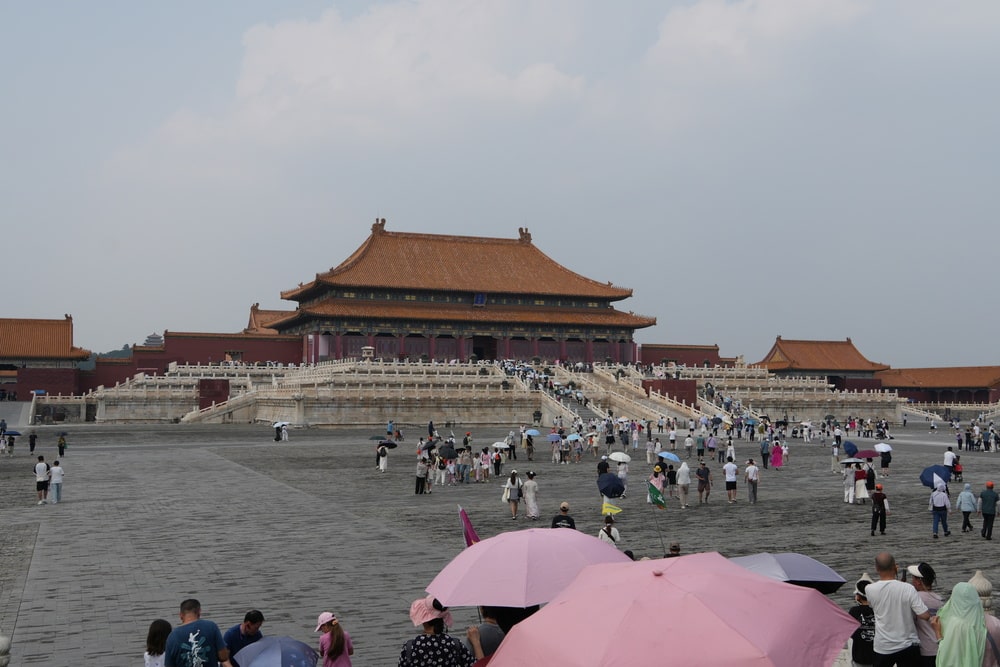
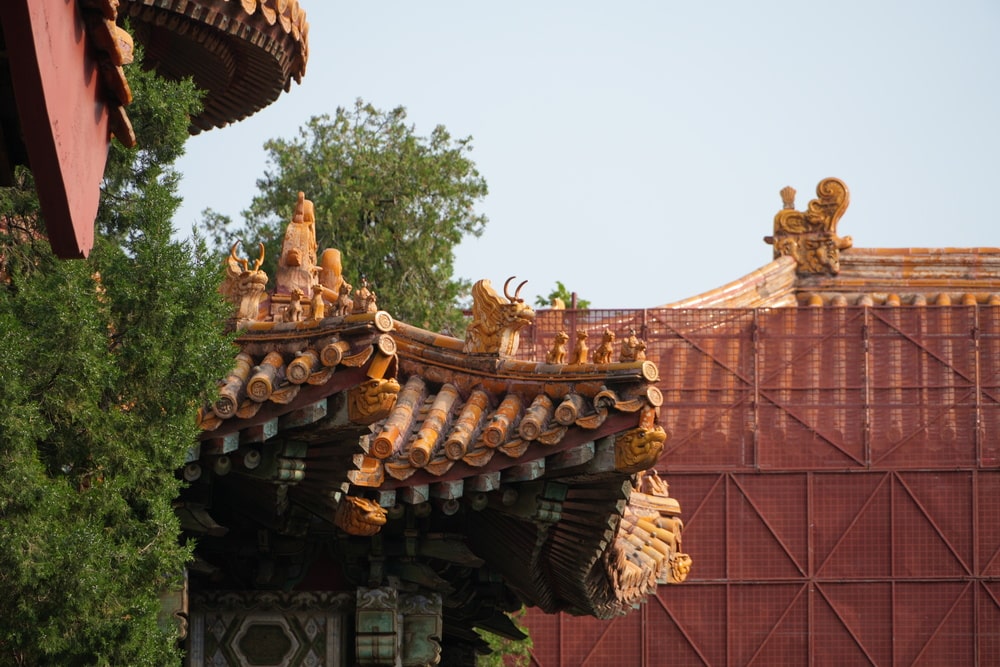
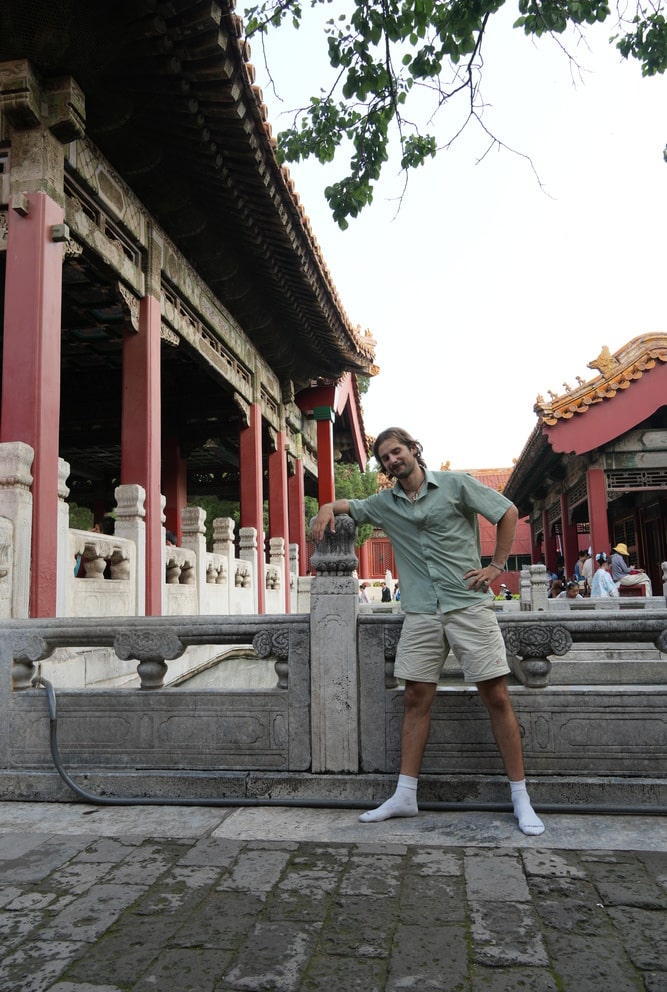
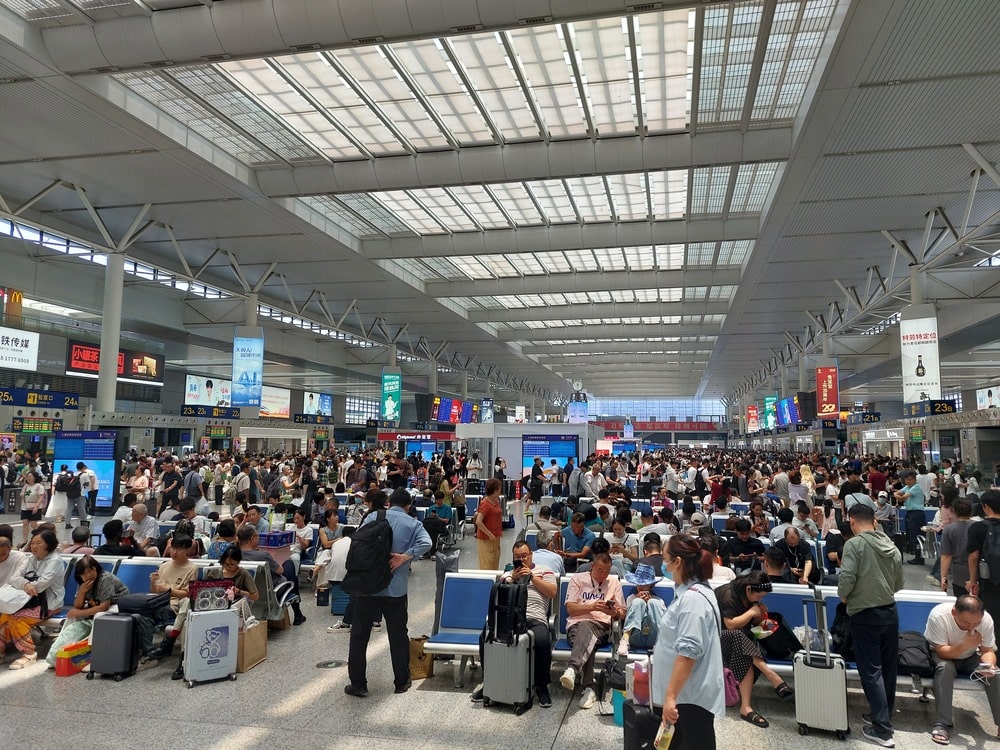 1-4) Forbidden City, 5) Beijing Main Railway Station
Shanghai
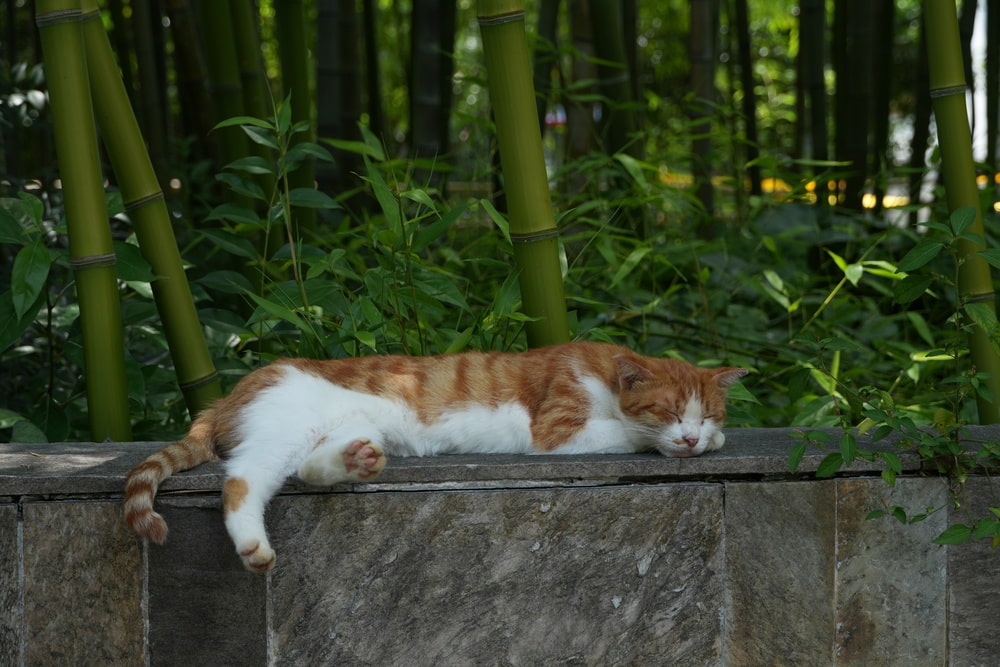
The train ride took almost 20 hours, but it was actually very comfortable, and I slept through most of it. We arrived in Shanghai a little before noon and headed straight to the hotel, hoping they would let us check in early. Luckily, we were right — we got our room immediately and could freshen up. The hotel was designed like a modern Western-style hostel, offering both capsule beds and private rooms. We took showers, unpacked, had lunch, and then set off to explore the city. Our first destination was the zoo to see a panda. Unfortunately, to our annoyance, it started pouring rain, though eventually it stopped. The Shanghai Zoo isn't one of the most modern — you can tell the enclosures are quite old — but it has a very rich collection of animals: tigers, lions, pandas (both red and giant), bears, many species of birds, and plenty more. The place gave us a sense of relief because there were surprisingly few people there, which is quite rare for China. There were, however, lots of cats wandering around, and we couldn't resist petting them. We walked for several hours until we finally reached the giant panda enclosure. They were absolutely adorable, calmly munching on bamboo leaves without a care in the world. Still, it was a bit sad to see such magnificent animals in captivity.
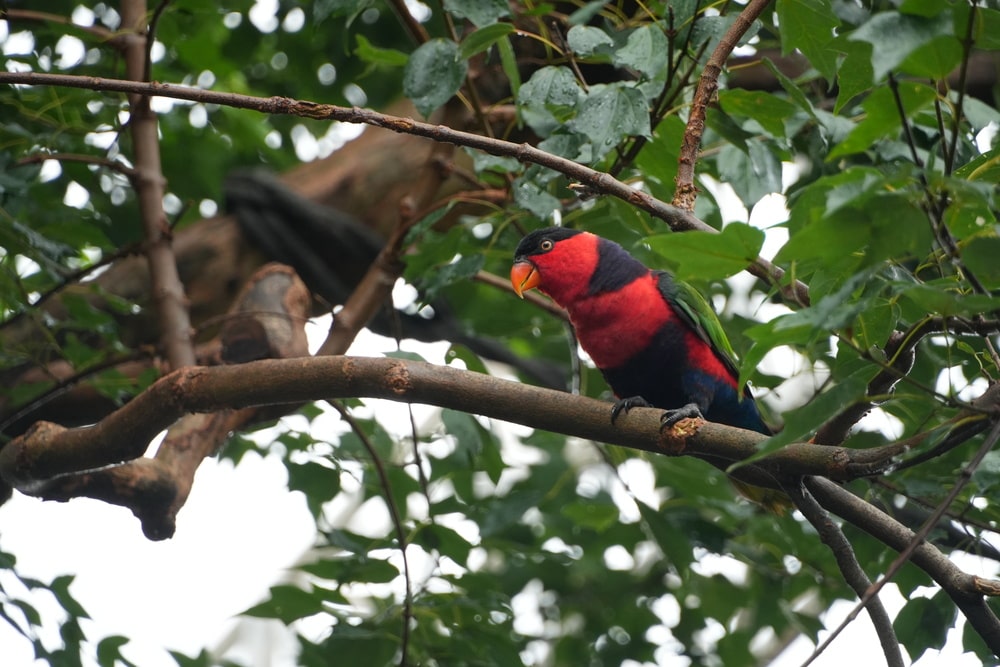
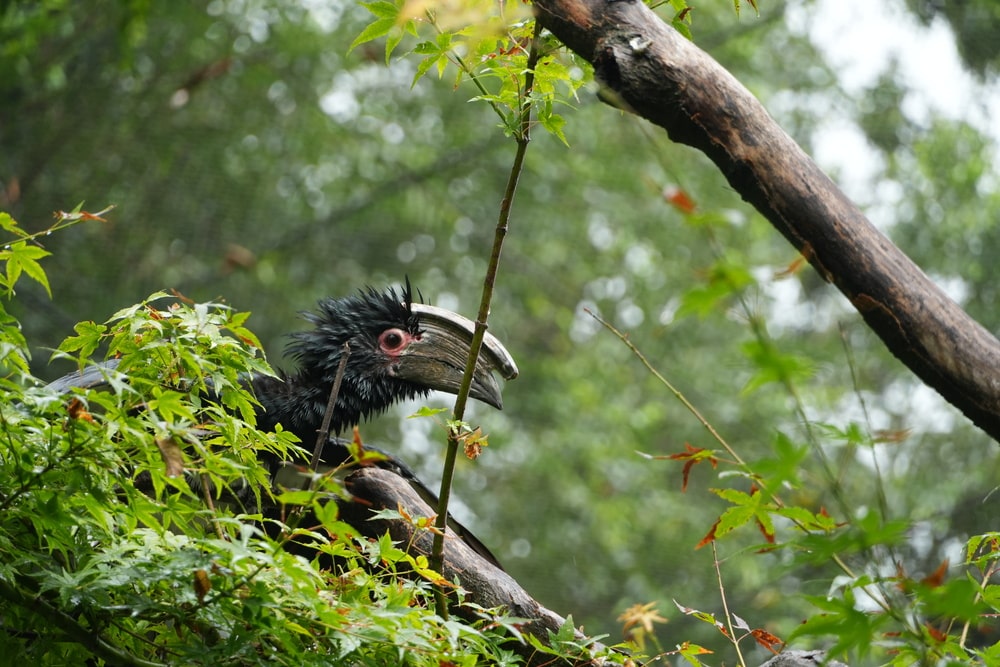
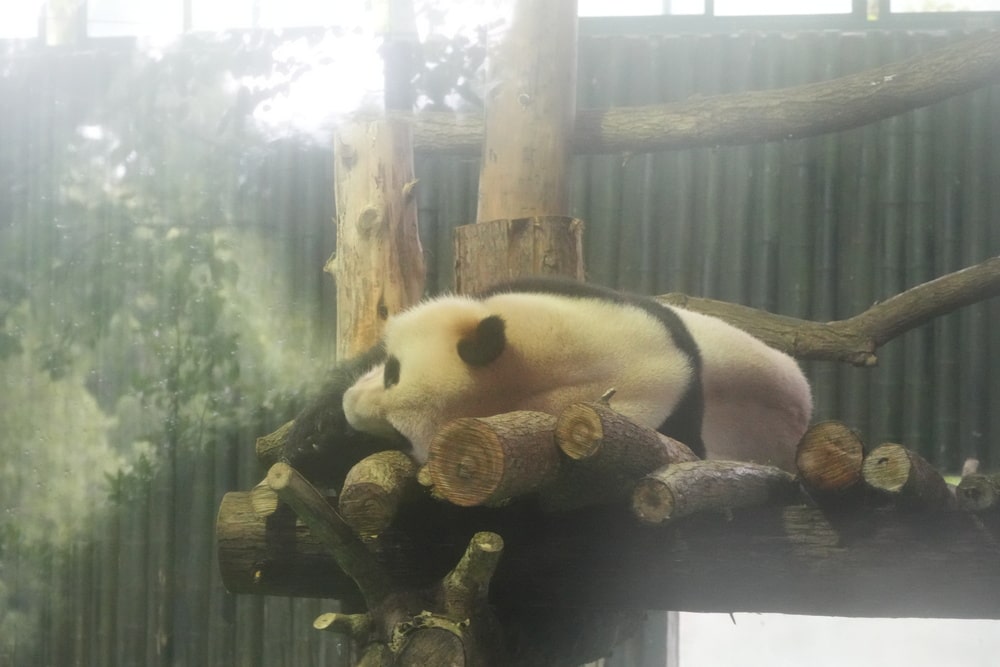
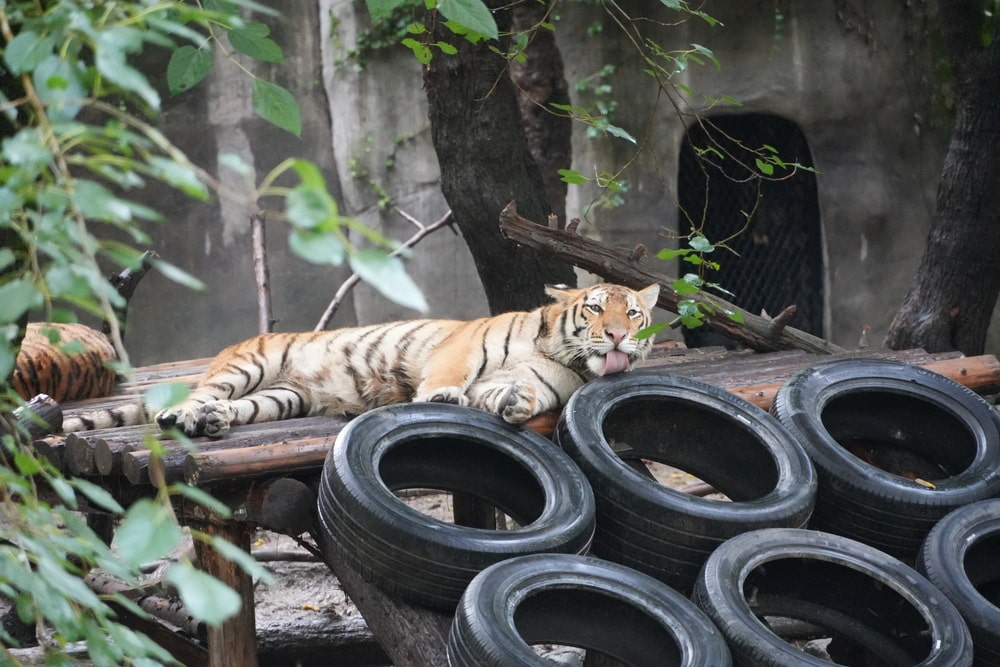
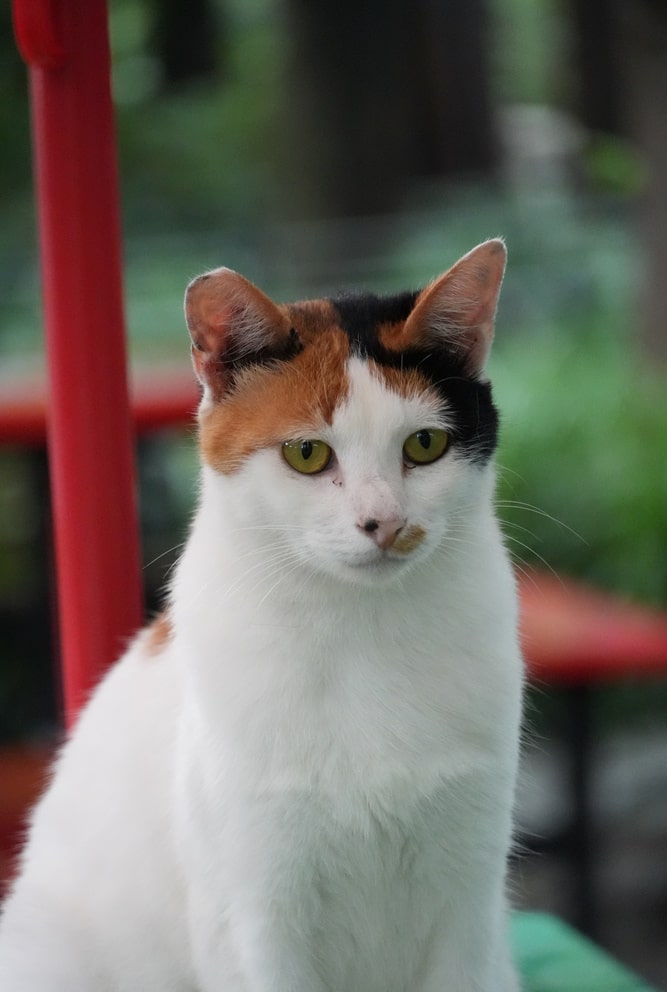 Zoo
Zoo
After the zoo, we planned to head back to the city center, but on the way we stopped by a very fancy perfume store that Agatka had found online. I definitely felt a bit out of place there, wearing my sweaty parrot-patterned shirt. Agatka bought a perfume as a souvenir, and then we returned to the metro. Next, we went to Yuyuan — a sort of mini district full of charming little streets, shops, and traditional buildings beautifully illuminated in red. You could easily spend the whole evening there. The architecture was breathtaking, and although the crowds were massive, it didn't ruin the experience too much. We bought a few small souvenirs — there were tons of them — and continued exploring. It was already late, so we walked to see the night-time skyline of The Bund, home to Shanghai's tallest and most iconic skyscrapers. There's the third-tallest building in the world, Shanghai Tower, as well as one of the most recognizable towers: the Oriental Pearl Tower. The view was fantastic, but we had to leave quickly because of how crowded it was. After all these attractions, we walked back to the hotel, passing through the city's famous shopping street along the way. It was a long day packed with things to see, but we managed to cover most of the must-see spots in Shanghai and could approach the next day at a more relaxed pace.
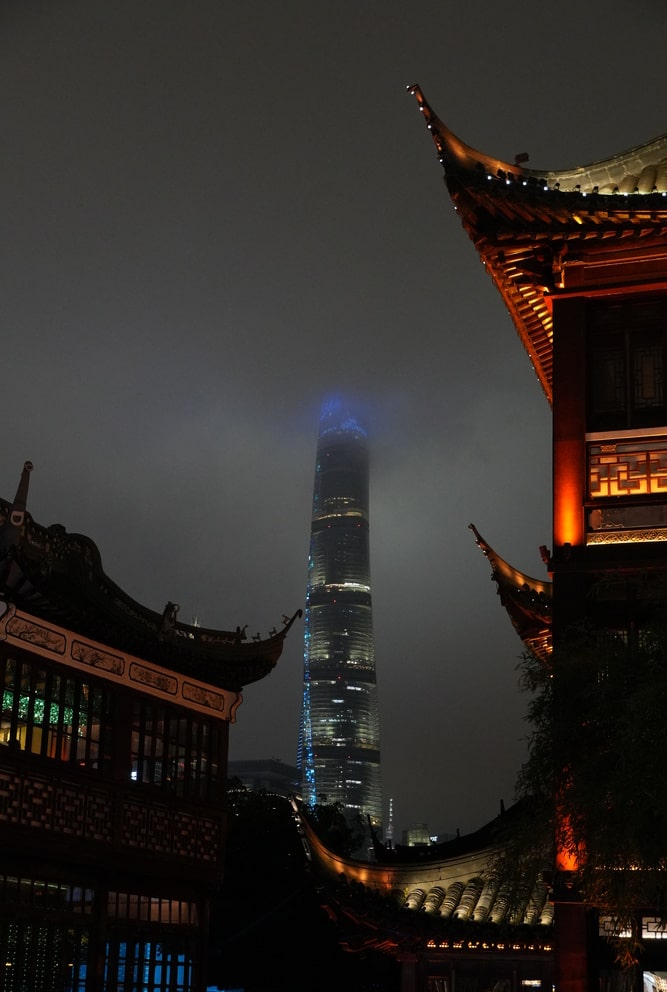
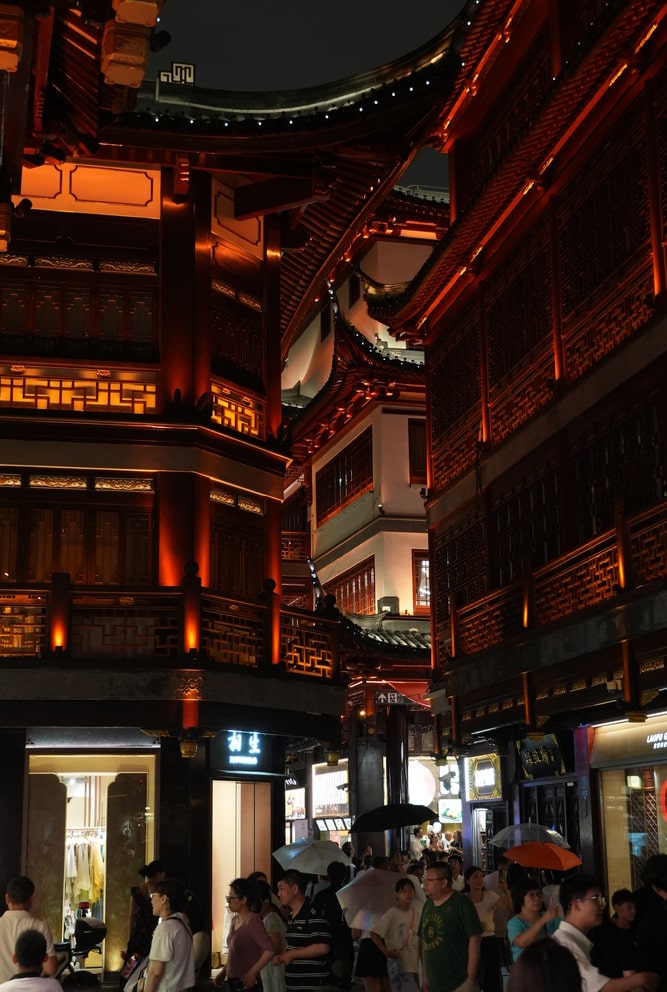
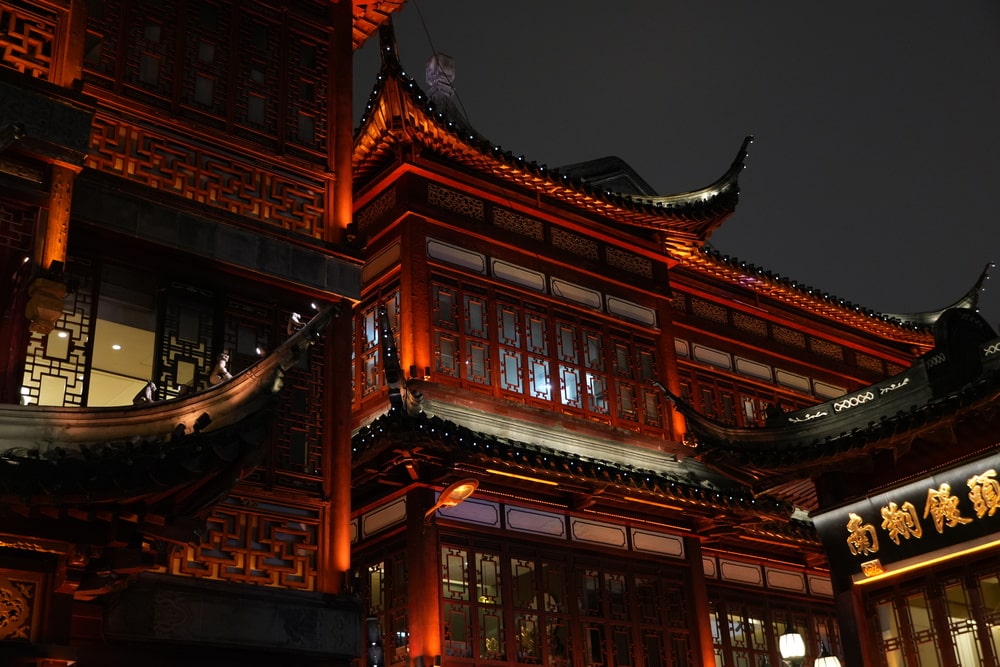
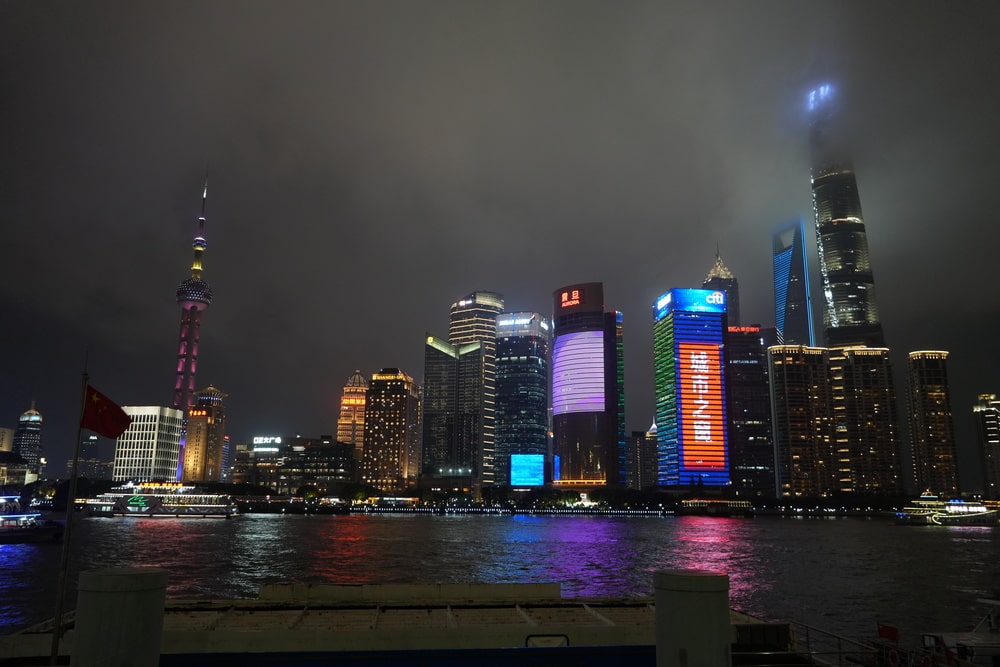
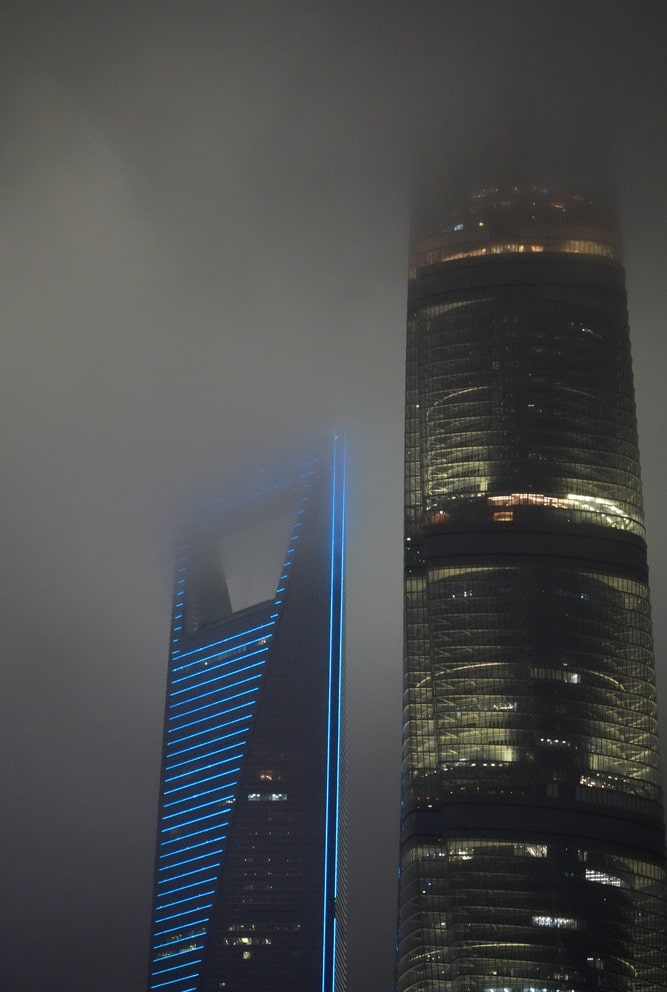
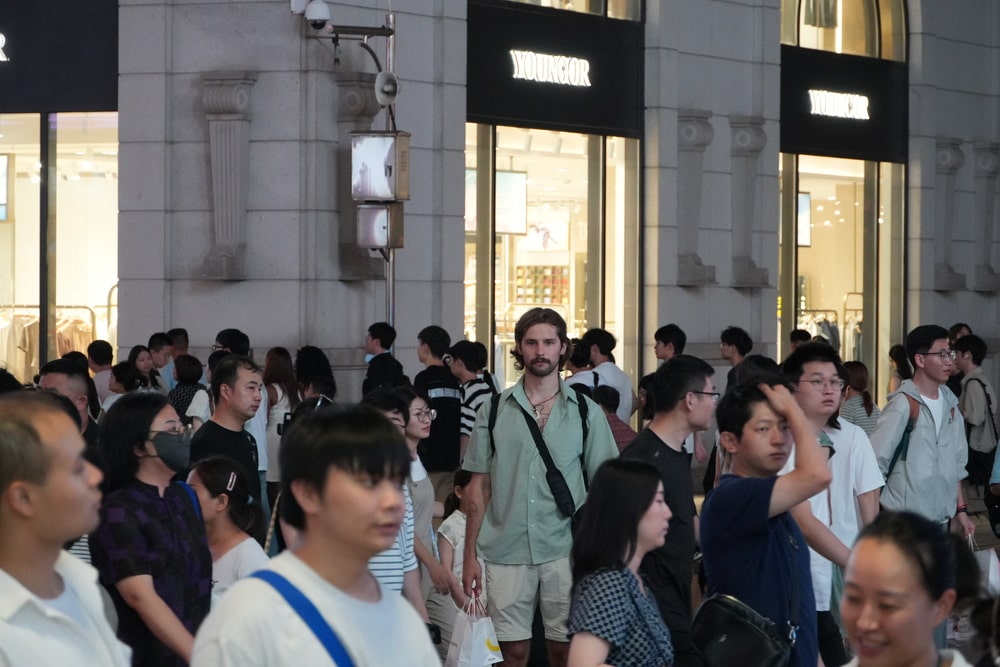 1-3) Yu Garden, 4-5) The Bund, 6) Crowd on the shopping street
We took the next day slowly — no rushing. We had breakfast and headed out into the city quite late. We strolled through the main streets again, passing by the Bund, and eventually reached Yu Garden. It's a tiny historic garden squeezed in between modern buildings. It was beautiful, but I don't think I've ever seen such crowds in my life. The space was small and the number of people enormous, so it was hard to really enjoy the place. Maybe during a different season it's more pleasant. Afterwards we went for lunch, and then we weren't quite sure what to do with ourselves. Eventually we took the metro to the other side of the river, right under the same skyscrapers that everyone admires from the viewpoints. It turned out there was a riverside park there, completely empty and incredibly peaceful. You have no idea how much we needed that break. We sat there for several hours, sipping cold shakes and taking in the view of the city. As the sun started to set, the sky darkened and the air cooled down, so we headed back to the hotel, stopping by a few shops along the way: we visited the second-largest Pop Mart in the world and a Duolingo café.
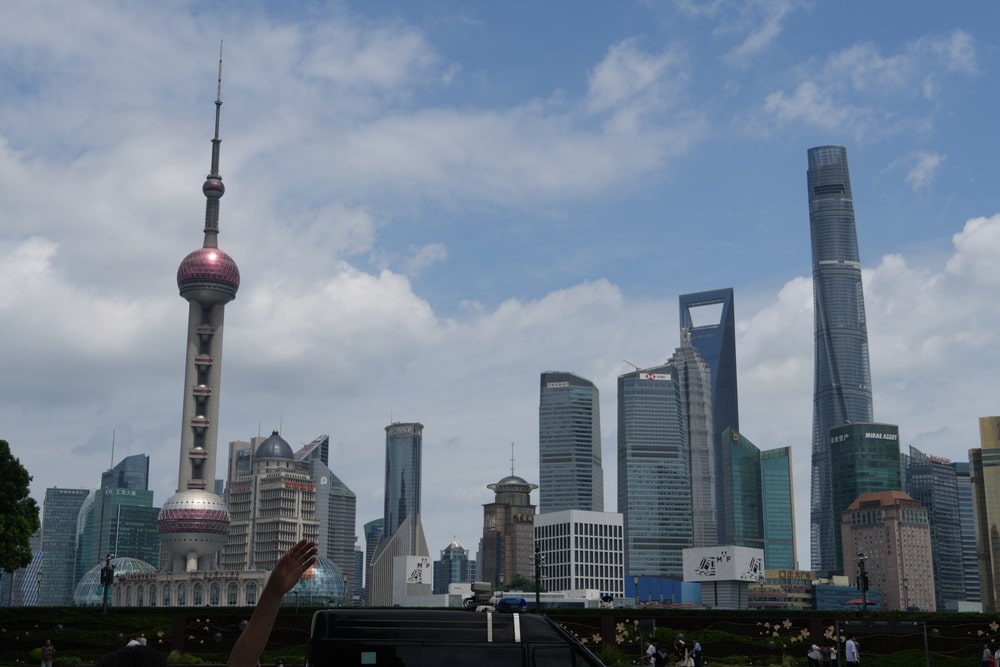
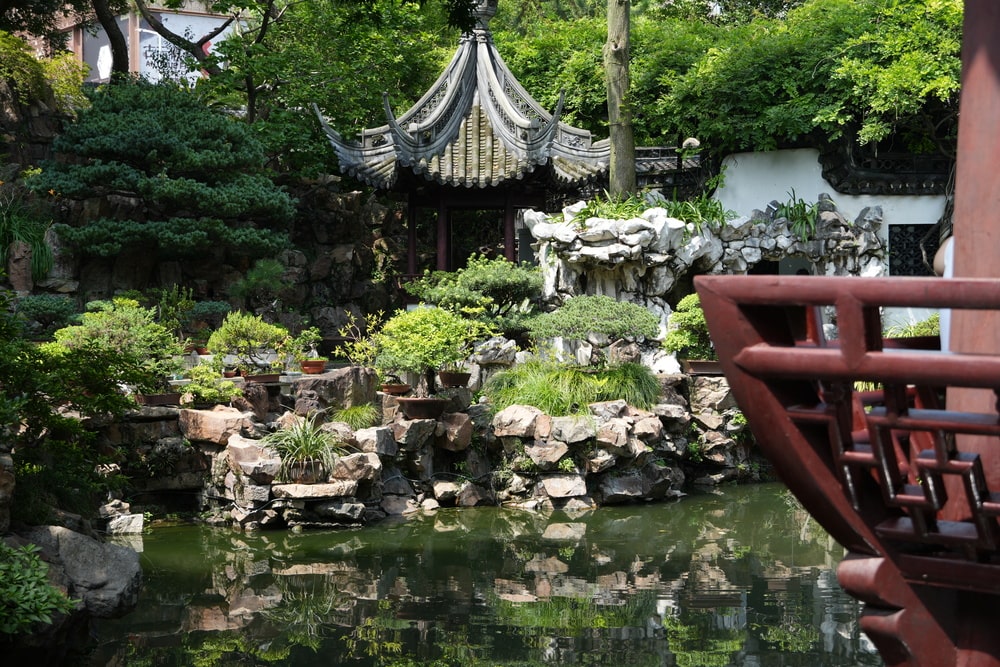
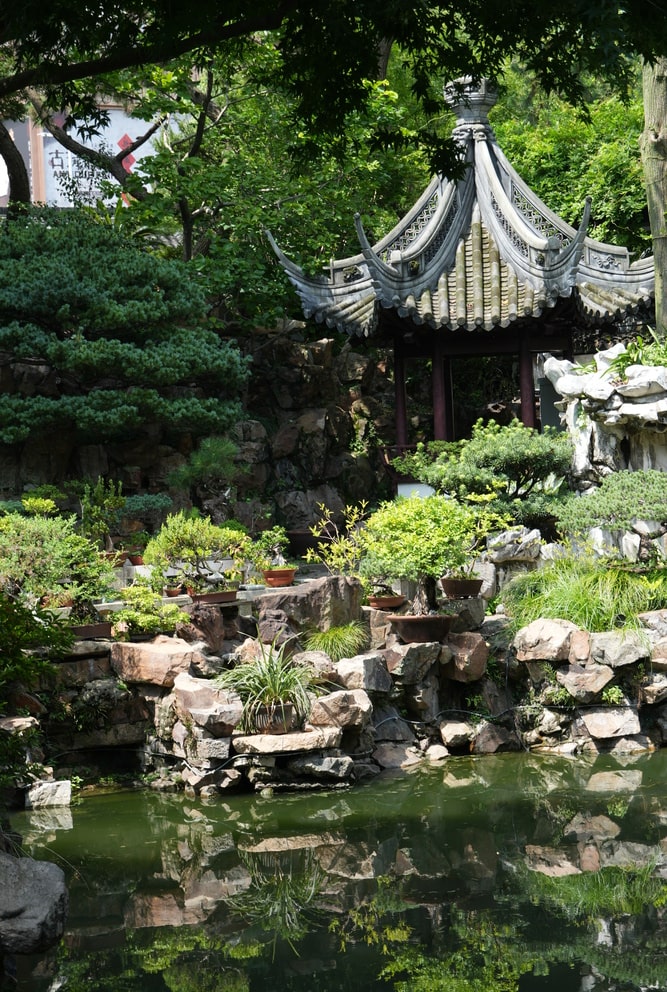
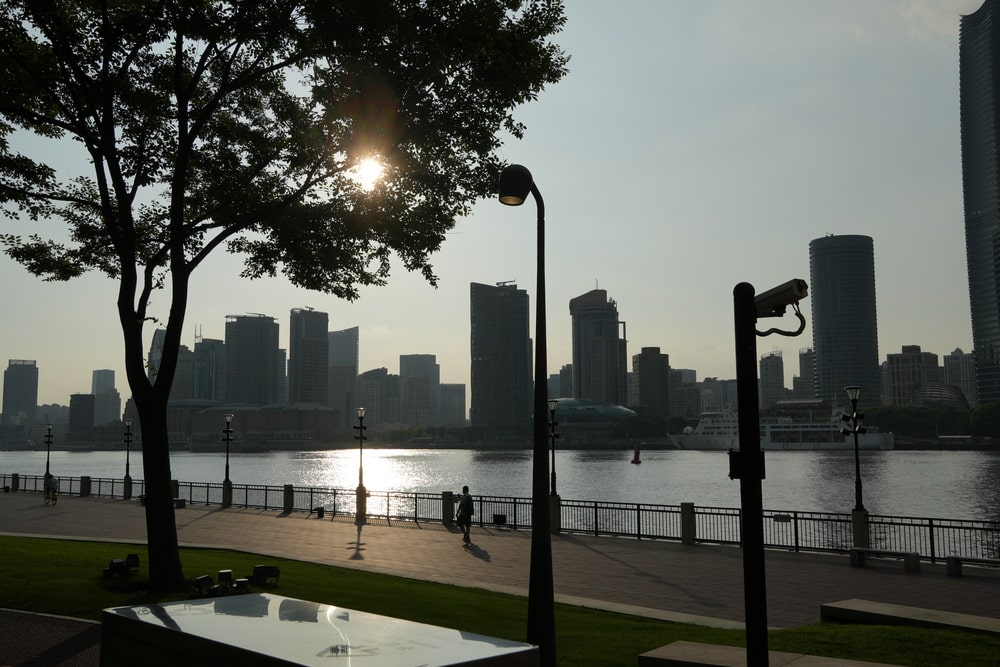 1-2) The Bund, 3-5) Yu Garden, 6) Park by the river
Hangzhou
The next day we had a tasty local breakfast at the hotel and then headed to the train station. We had a short, one-hour trip to Hangzhou — a very wealthy city located relatively close to Shanghai. Why “relatively”? Because on a European scale we would've crossed several countries in that time, but thanks to China's high-speed rail, it took only an hour. When we arrived, we were struck by how clean everything was and by the huge number of shops selling luxury Western brands. We first went to our hotel, which turned out to be the most luxurious one of the entire trip. We got our room quickly and were ready to go explore the city. We wanted to walk to the main attraction — West Lake — but on the way we stopped by a shopping mall. It was very fancy, filled exclusively with expensive brands, and there were barely any locals inside. We had the only meal on the trip that was genuinely expensive by Chinese standards, and then headed toward the lake. West Lake is famous throughout all of China. The artificial lake at the Summer Palace in Beijing was modeled after this one in Hangzhou. There's a very pleasant and scenic walkway surrounding the lake, though I should mention the lake is enormous — walking all the way around it is nearly impossible. Renting bikes is a better idea. We decided to walk along the water for as long as we felt like it. Along the way we passed restaurants, cafés, temples, and parks. It's a very touristy area. The lake looks beautiful during the day, and even more magical at night when everything lights up. The surface is full of small boats that you can rent and ride around. It's also very safe, with lots of security, although you do have to be careful — for example, you're not allowed to sit on the grass. A guard will come over and tell you to move. After a very pleasant four-hour walk, it finally got dark, so we turned around and headed to the metro. Our hotel was in a very convenient location, so we got back quickly and went straight to rest.
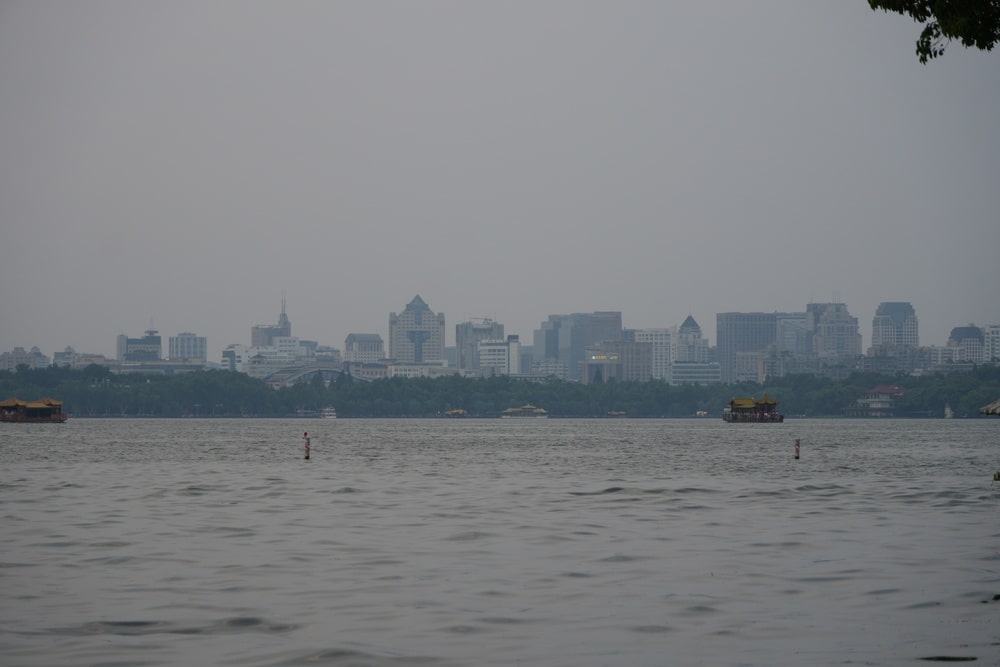
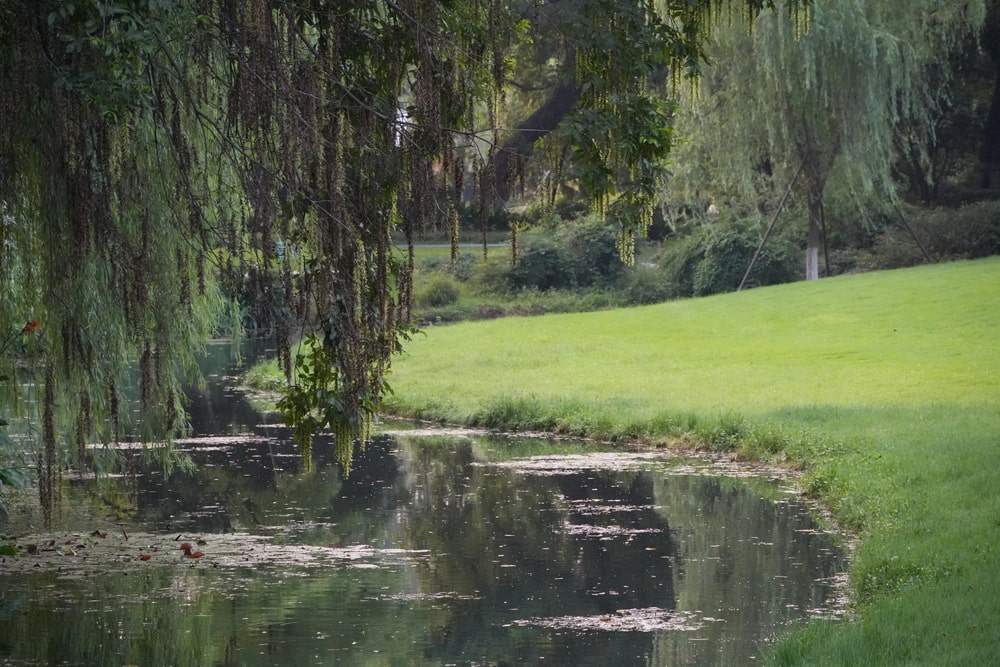
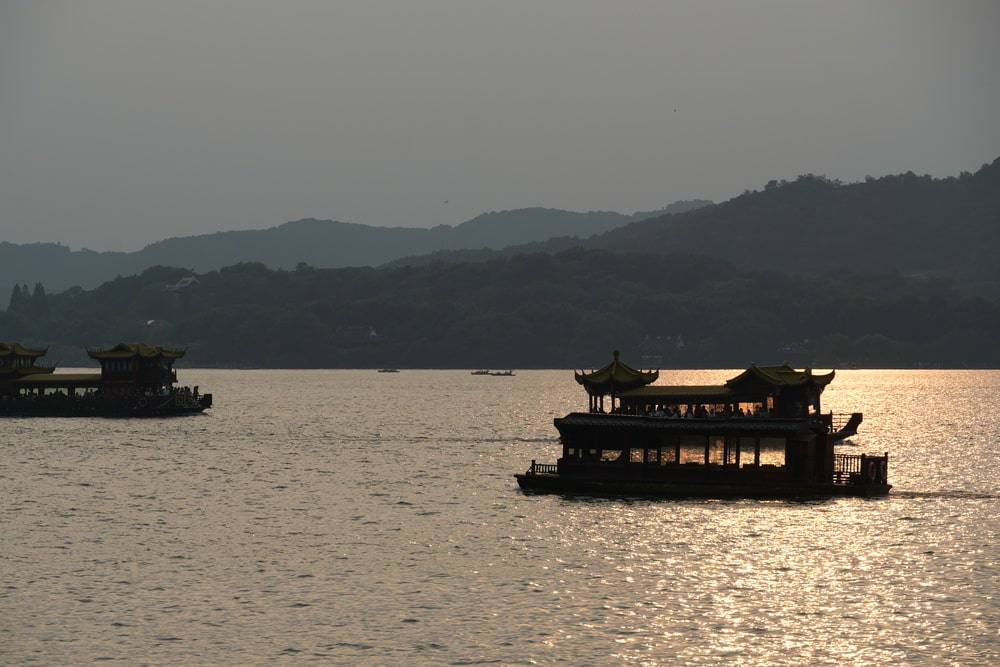
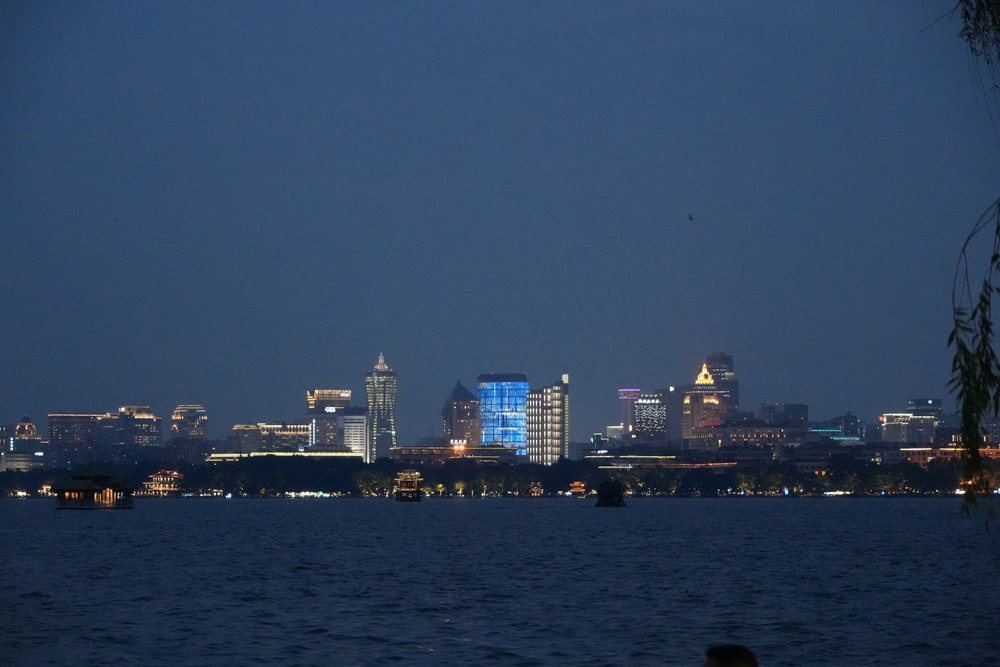
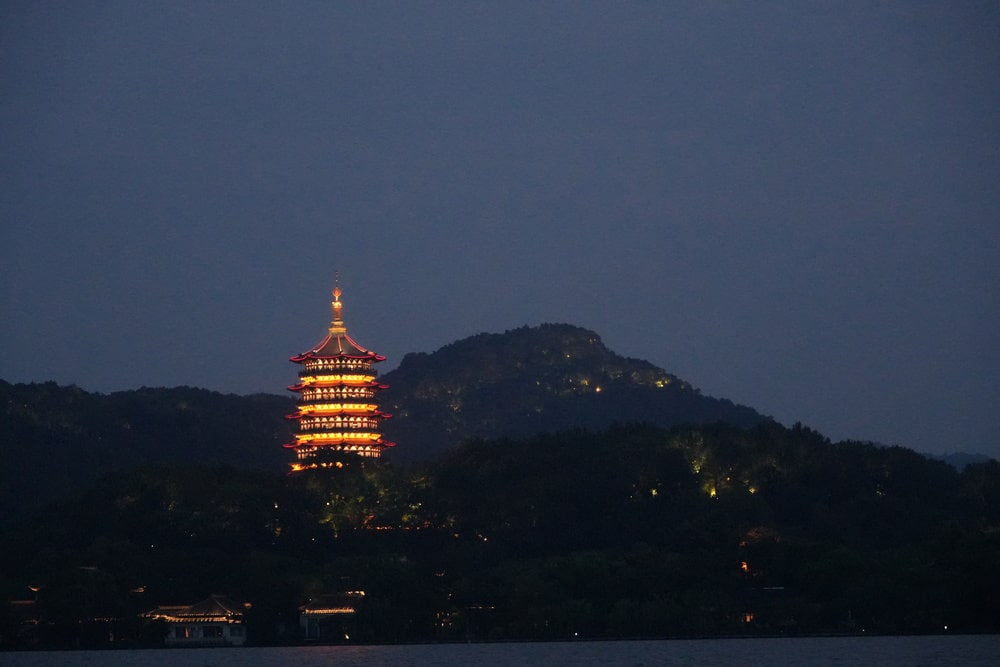 West lake
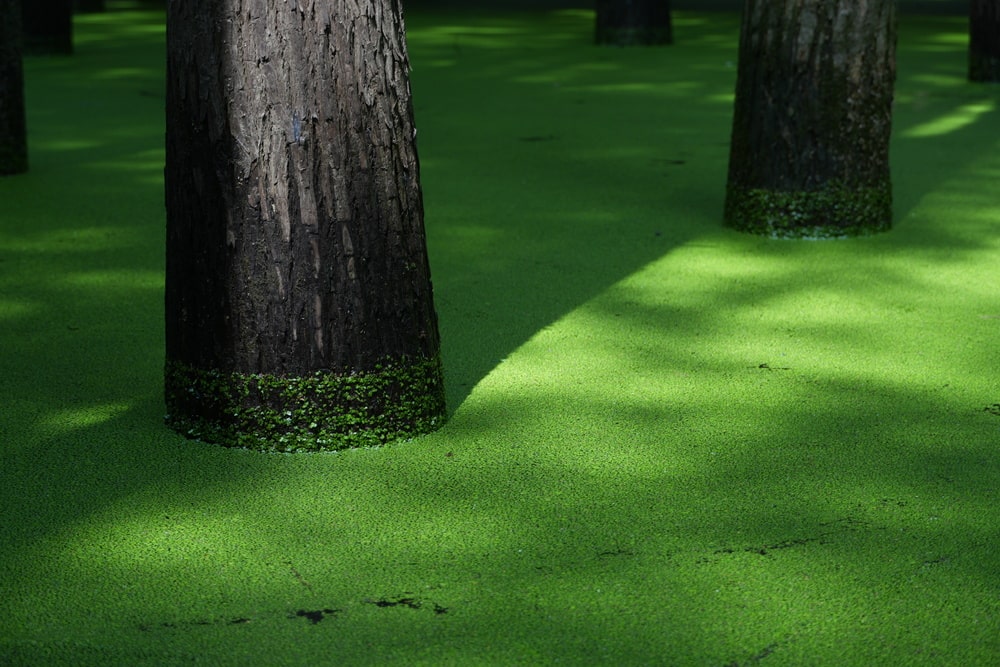
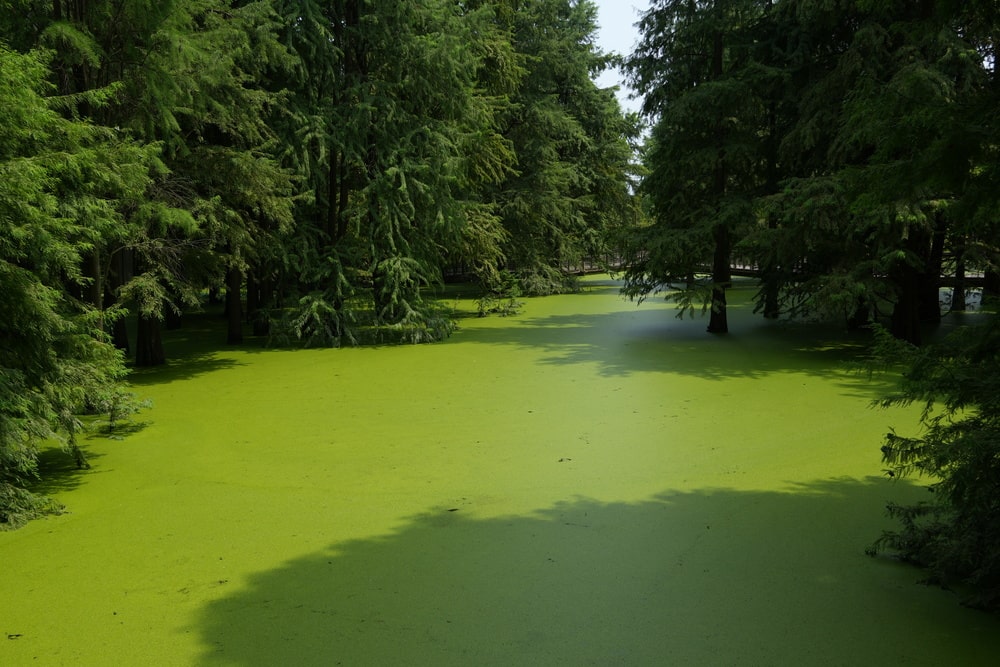
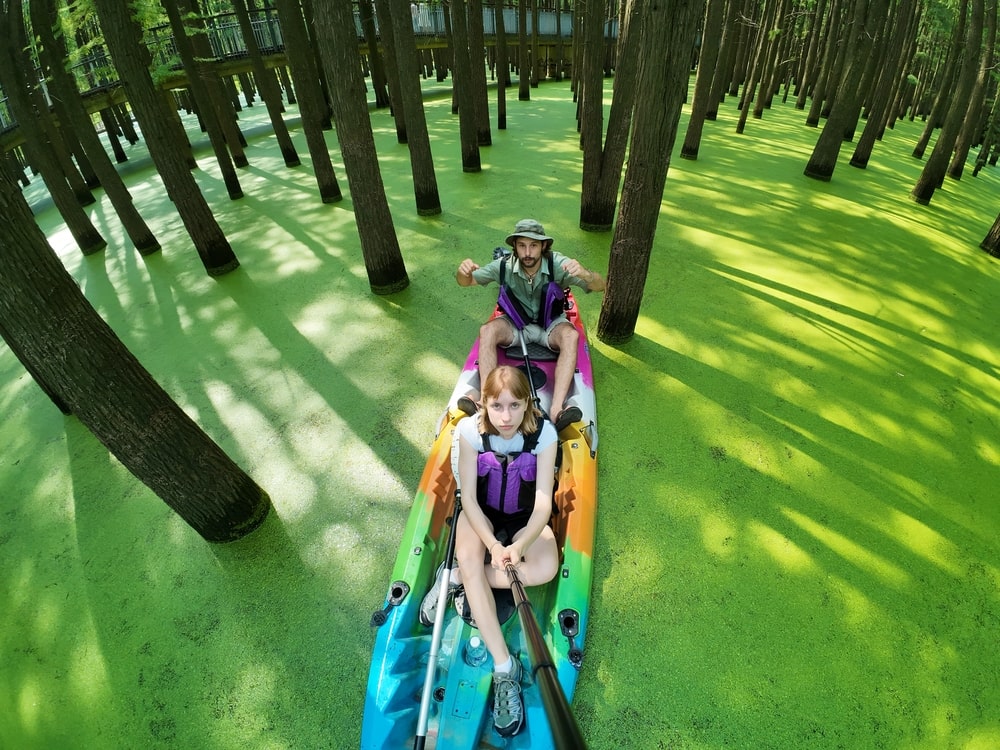
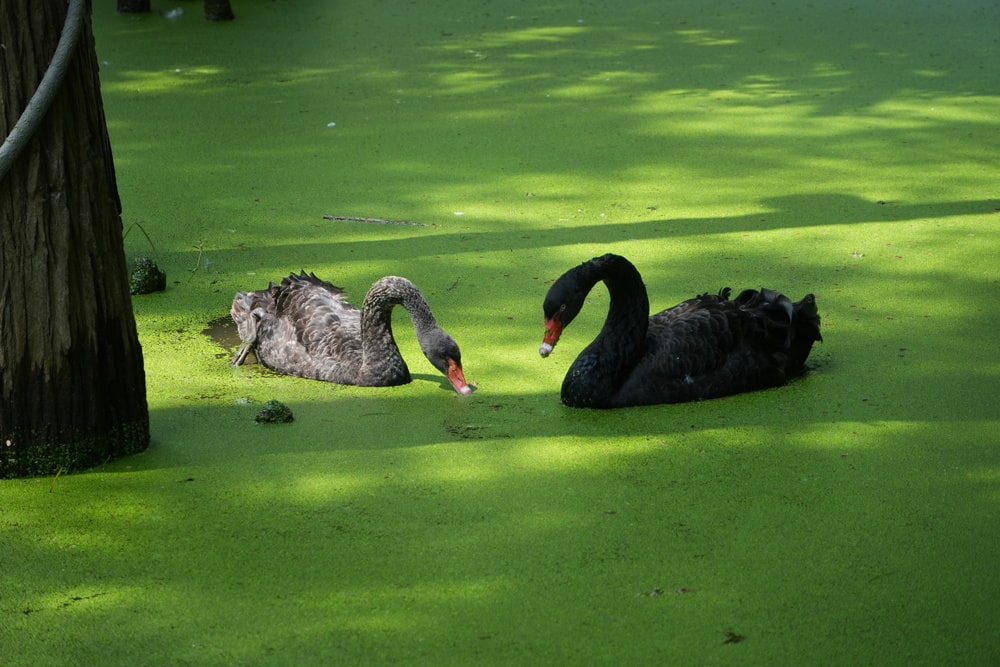
The next day we went to see something we had been looking forward to the most in this city — the so-called Matcha Lake. You can get there by metro, even though the lake is quite far outside the city. But what exactly is it? You've probably seen places like this on Instagram. It's a lake where a forest grows directly in the water, and the surface is completely covered with water lettuce. To the point where you can't see the water at all. The result is a greenish, matcha-colored surface with trees sticking out of it. At first glance, you might think it's a meadow. It's truly a breathtaking place, and almost completely empty — at least by Chinese standards. It's peaceful and quiet. There are plenty of walkways above the water and between the trees. There are also a few “wild” animals, like deer and swans, although they are tame. You can even rent a kayak and paddle among the trees. It's one of the best attractions I've ever seen or experienced in China. Drifting freely among hundreds of trees on the green water — it's really indescribable. We spent most of the day there, but eventually it was time to head back. The metro connection is extremely convenient.
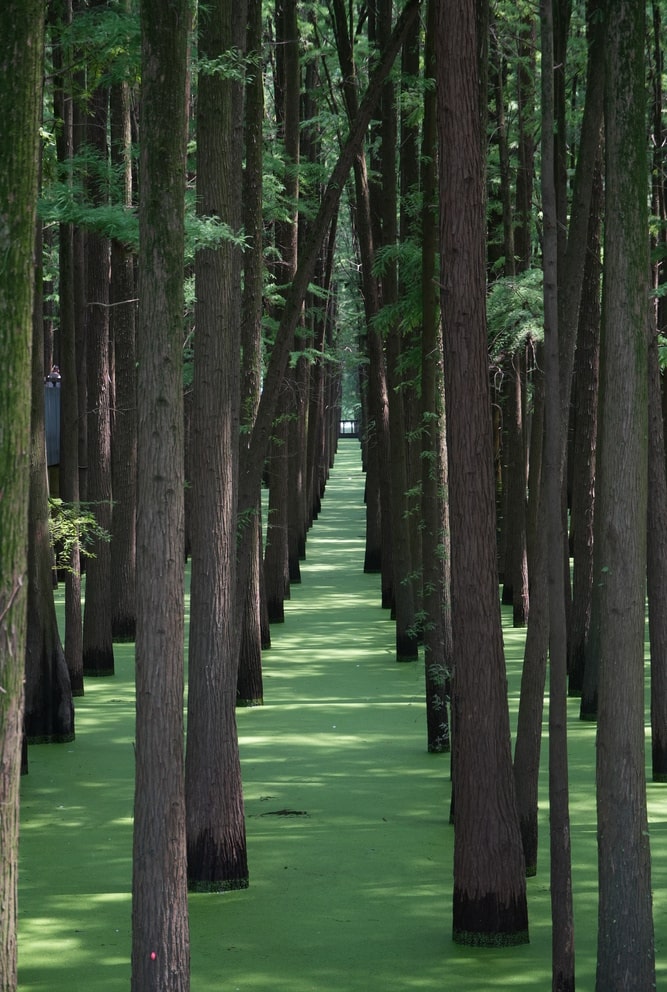
On the way back, we stopped near the athletics stadium, had lunch, and then went to a nearby park. The park turned out to be a fairly large hill just above West Lake. We worked up a sweat climbing to the top, but the views were more than worth it — you could see all of Hangzhou. Wandering carefree along the paths, we came across several Buddhist temples, and later reached a cluster of large rocks with even better panoramic views. There were lots of local young people there. We all sat together on the rocks, admiring the city as the sun set — truly a magical moment. After it got dark, we descended to the lake and slowly walked back to the hotel. There, I experienced a small culture shock — I was riding the elevator when, on a certain floor, a robot joined me. It got off at the same floor, went to a specific room, rang the doorbell remotely, and handed snacks to someone. After completing its mission, the robot returned, called the elevator, and went back to the reception area to await its next task. It was incredible — something I had never seen in Europe.
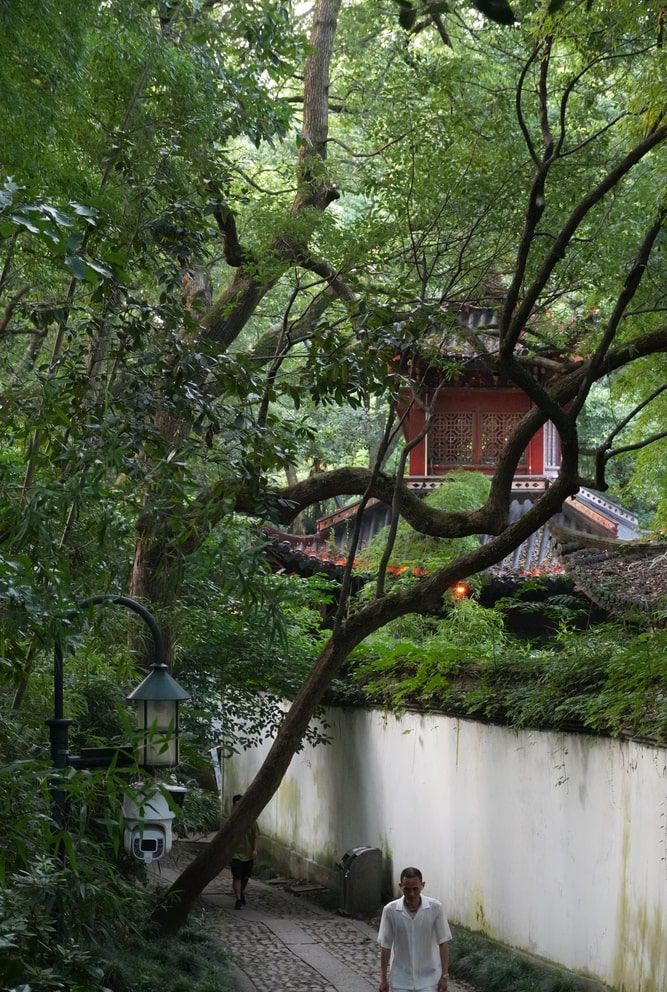
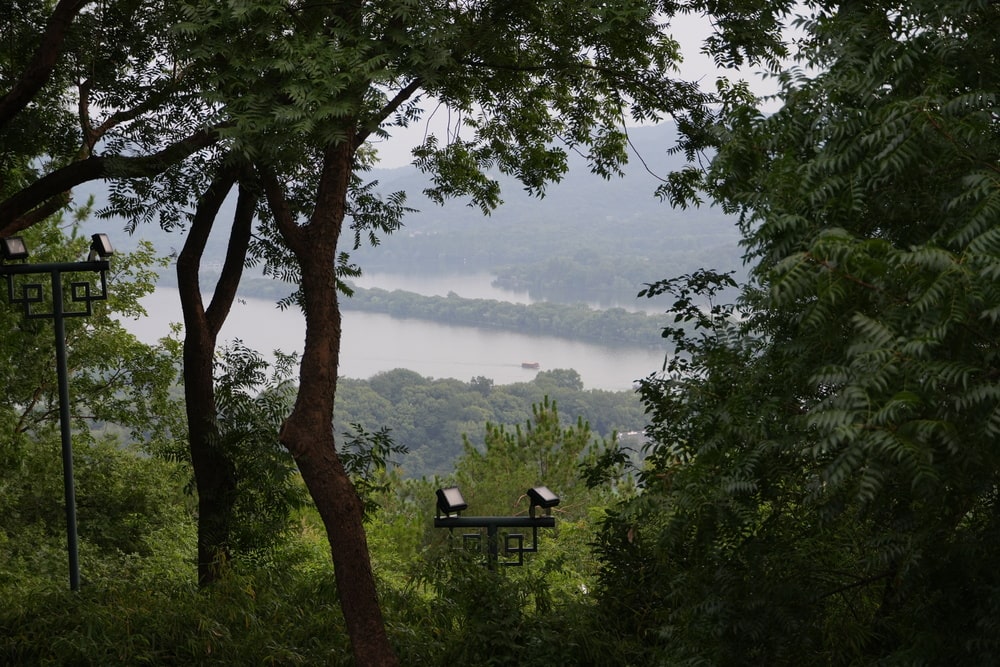
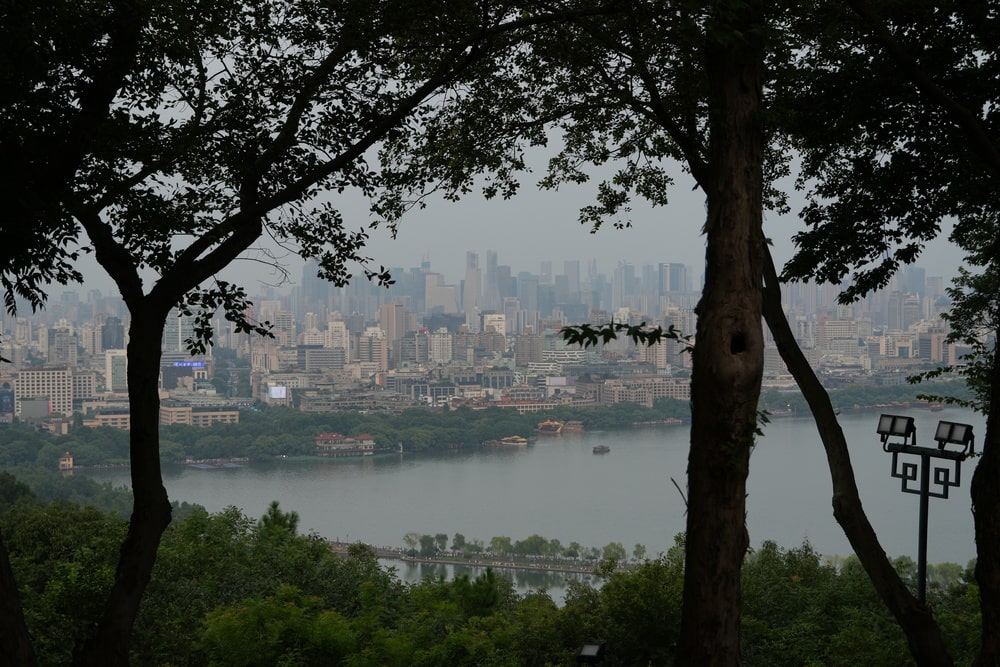
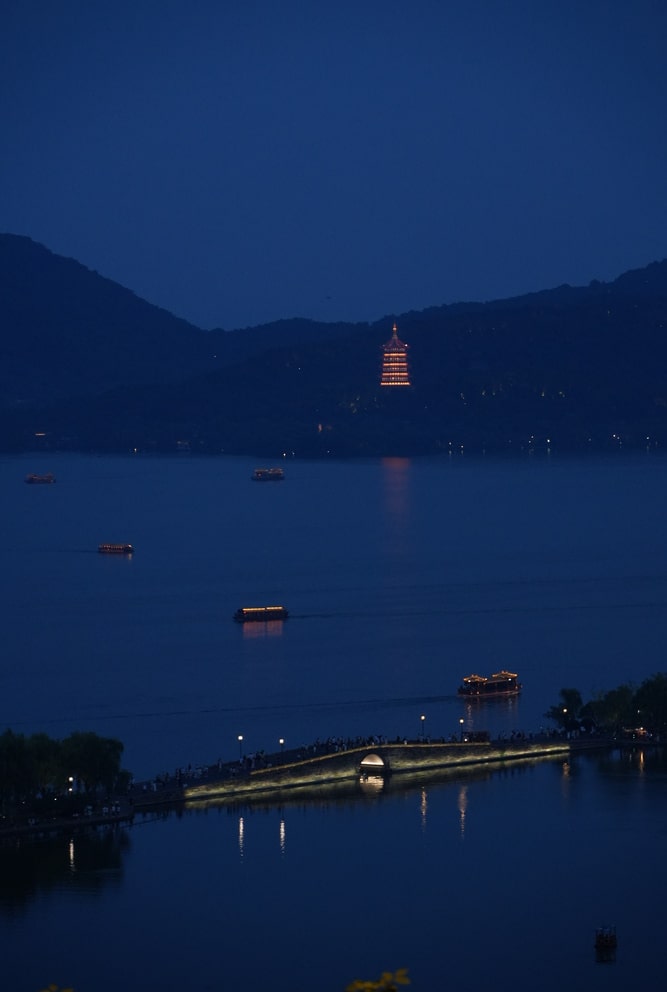 Views from the hill in the park
Our third full day in Hangzhou also began with a trip outside the city. We took a bus to the Tea Museum beyond West Lake (there are two tea museums in Hangzhou — we visited the farther one). The journey wasn't difficult or long. The museum is set in a beautiful landscape of tea-covered hills. The place showcases tea cultures from all over the world. You can learn a lot about this iconic and globally significant beverage. On the grounds, there is also a tea house where you can enjoy excellent brews, including China's most famous green tea — Mingqian Longjing. (It turns out Hangzhou is the birthplace of this tea.) Behind the museum buildings, there's a lovely park, and part of its charm is the complete lack of crowds. In the entire museum, we saw only two other tourists. Walking deeper into this stunning garden, you can reach the top of a hill, from which you can see the surrounding area and even the city. Overall, the place is incredibly atmospheric, educational, and a perfect escape from the usual Chinese crowds. On the way back, we still had plenty of time, so we visited another fairly large attraction — Jinghui Park. There is a famous Buddhist temple here that attracts many tourists. It requires an entrance fee, but right next to it are other temples that are free and just as interesting and beautiful. There are so many of them that you could spend hours exploring. Surrounded by the calm of the gardens, the scent of incense, and sleeping cats, we spent our time there until dusk. Finally, exhausted from all the walking, we returned to the hotel and collapsed into bed.

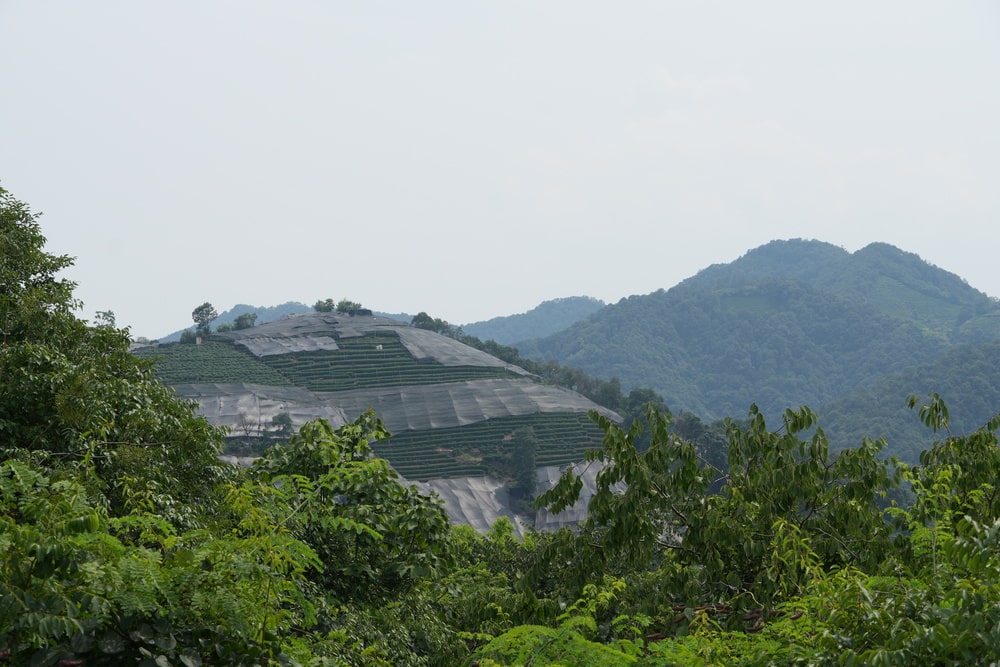

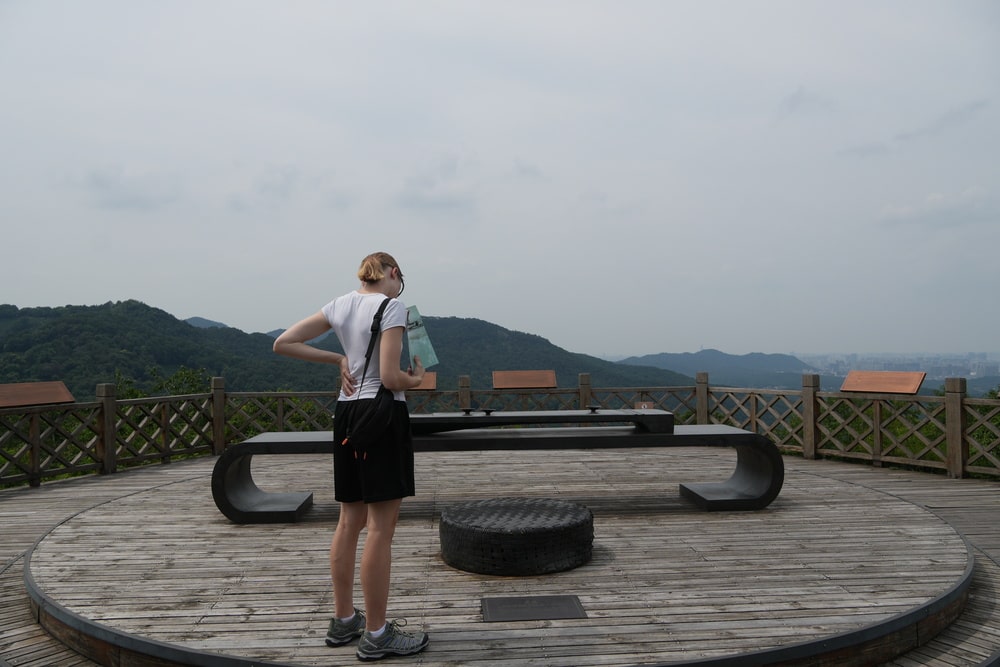
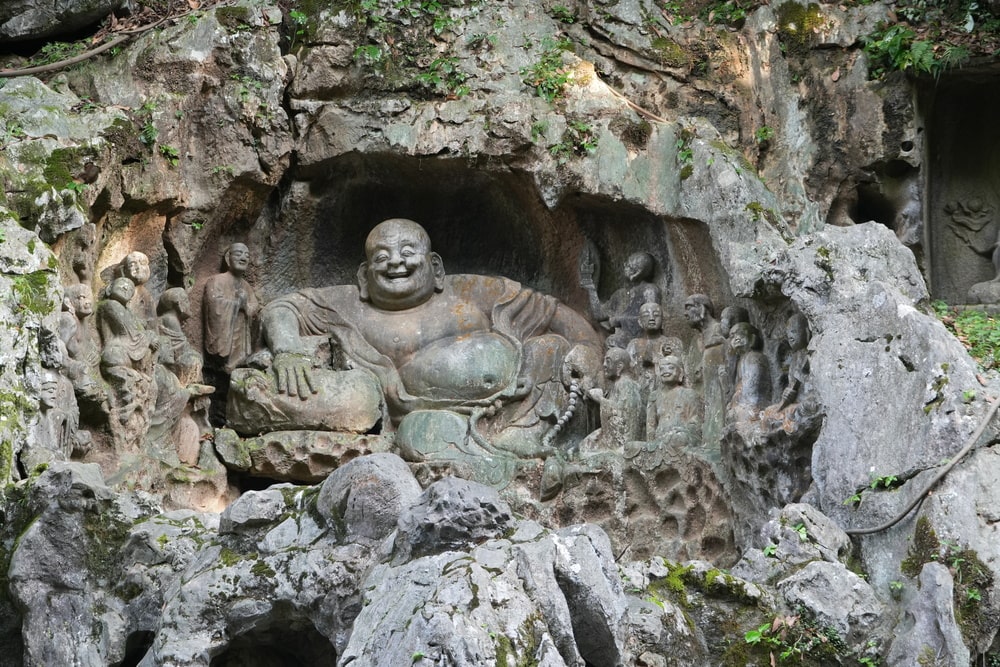
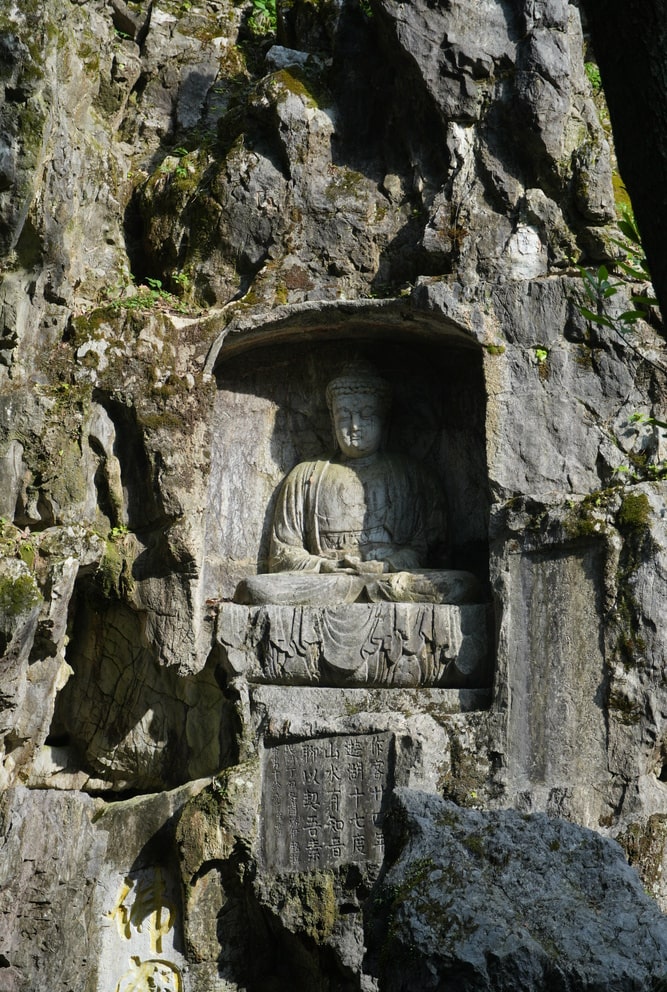
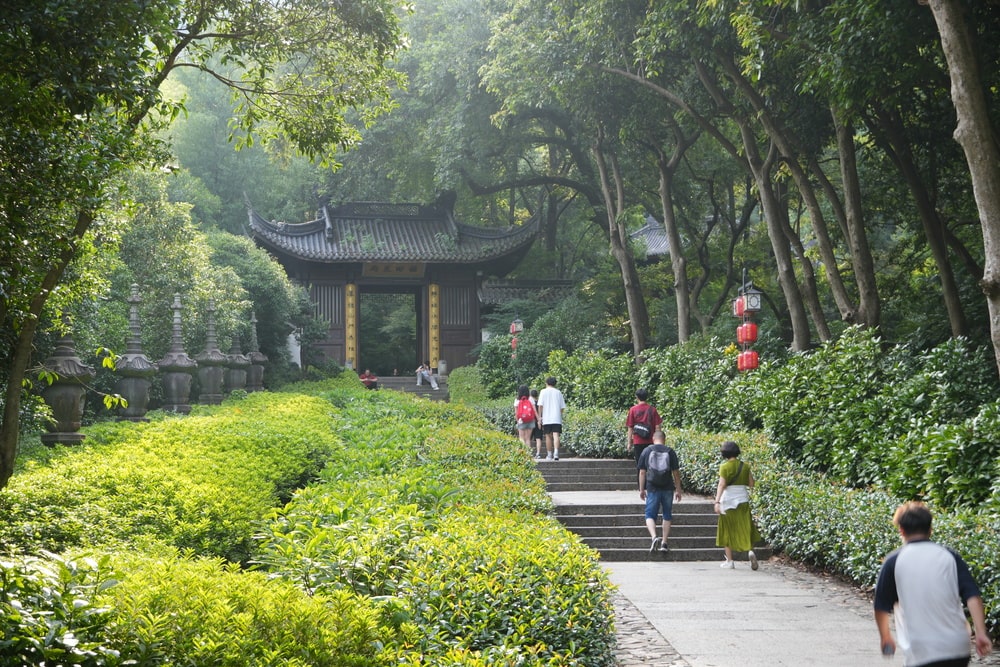
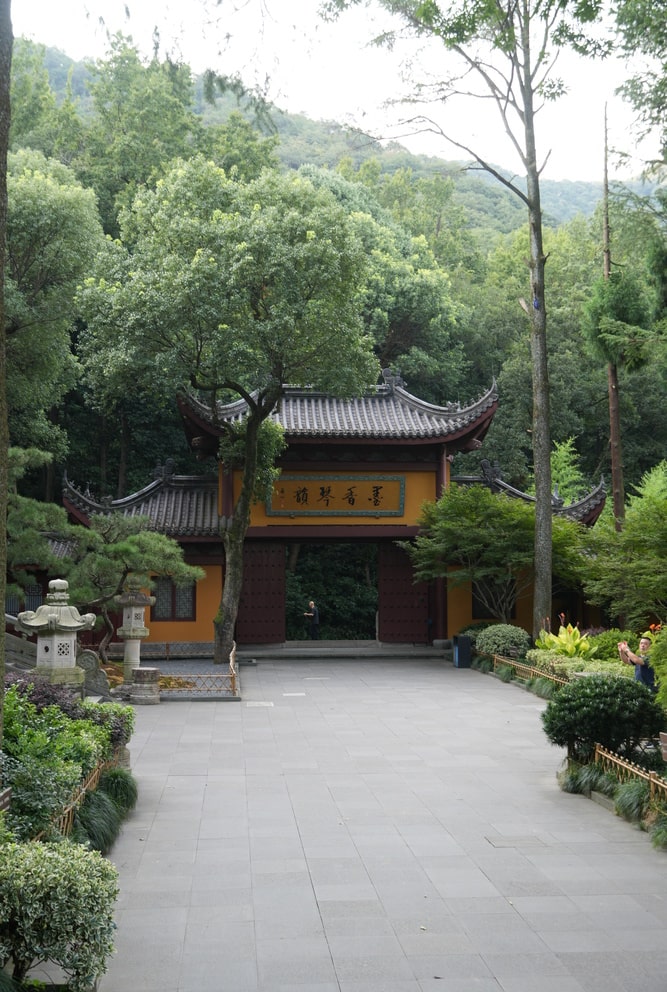 1-4) Tea Museum 5-8) Jinghui Park
Guilin
The next day we had a long train journey ahead to our final city in China — Guilin. This place is famous for the Li River, which flows between the area's unique karst mountains. Just take a look at the photos, and you'll understand why it's such a popular and beautiful destination. The train ride took almost eight hours, so we spent the entire day on it. At the Guilin station, a driver was waiting to take us directly to our hotel — a small, charming building in a quiet village just outside the city. Once we arrived, we quickly checked in and freshened up, but still had a few hours to spare. We took a taxi — which cost only $2 — to the city center. In the heart of the city, there's a small lake with two pagodas in the middle: the Sun and Moon Pagodas. At night, both towers are beautifully lit in gold and silver, creating a truly magical sight. We spent some time admiring them and then wandered through the surrounding streets in search of a place for dinner. After the meal, we finished our short evening stroll and returned to the hotel to rest.
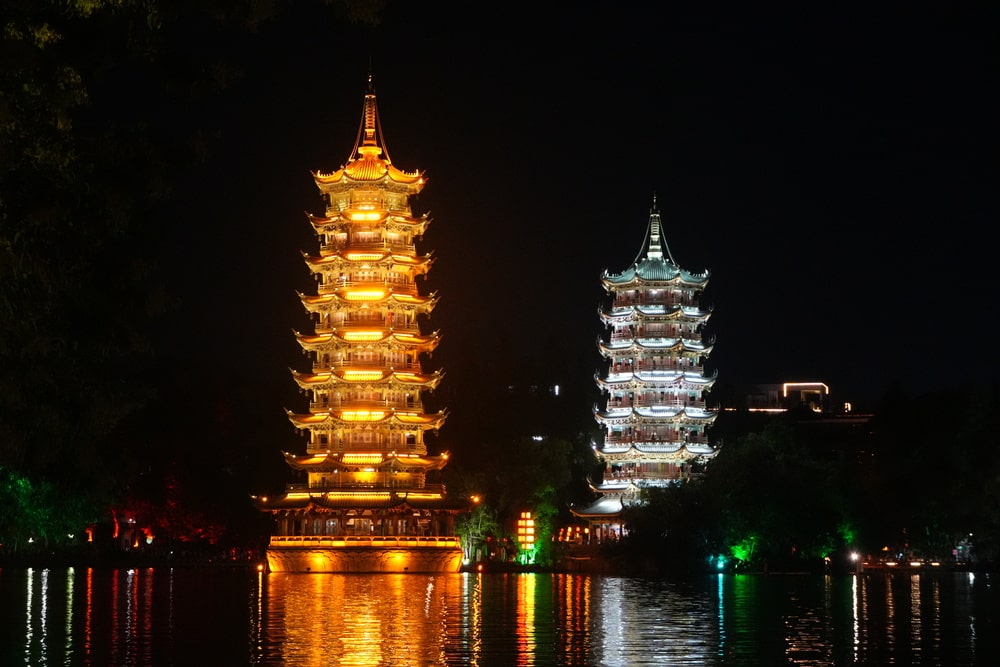 Sun and Moon Pagodas
Since we arrived in Guilin in the evening, we hadn't had a chance to get familiar with the area or book any attractions yet, so that day was pretty relaxed. In the morning, we went to a very interesting, unusual, and beautiful park on the outskirts of the city. The grass was perfectly trimmed, and in the background stood the massive hills for which the region is famous. The effect was truly stunning — it felt like being on another planet. Unfortunately, since Guilin is further south, the heat and the sun were intense, making it hard to stay out for long. We had to take many breaks in the shade, and we even bought a sun umbrella — very popular among the locals. We spent several pleasant, though hot, hours enjoying the scenery and admiring the power of nature on the horizon. Eventually, it was time to head back, so we called a taxi to take us to the hotel, where we had lunch at a nearby restaurant. Since we were very tired that day, we kept things low-key. After an afternoon rest, we went for a walk along the river, exploring the outskirts. It turned out to be a great decision, as we got a glimpse of everyday life in China behind the scenes. There were lots of people jogging, practicing tai chi, or simply strolling. The surroundings were very pleasant and peaceful, although the river itself was unfortunately quite polluted. We returned to our room as night fell and waited for the next day, which promised some exciting attractions already lined up.
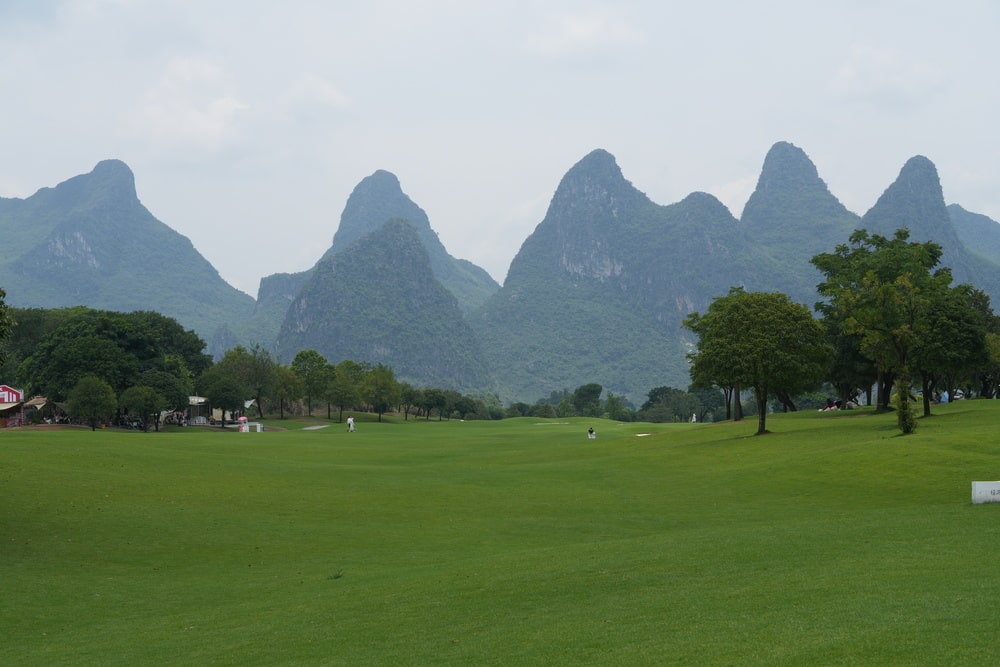
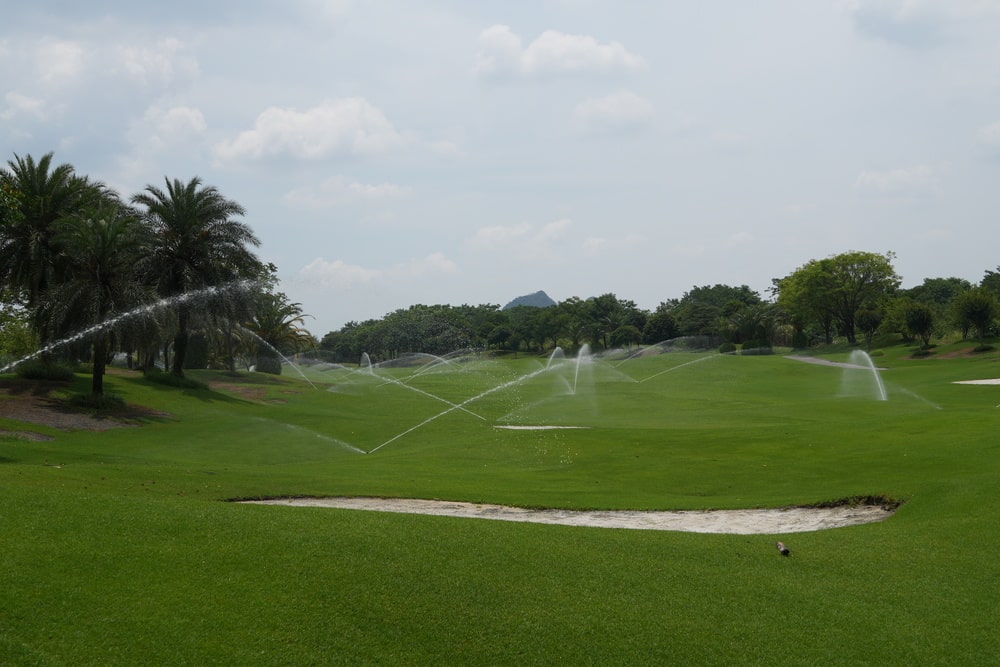
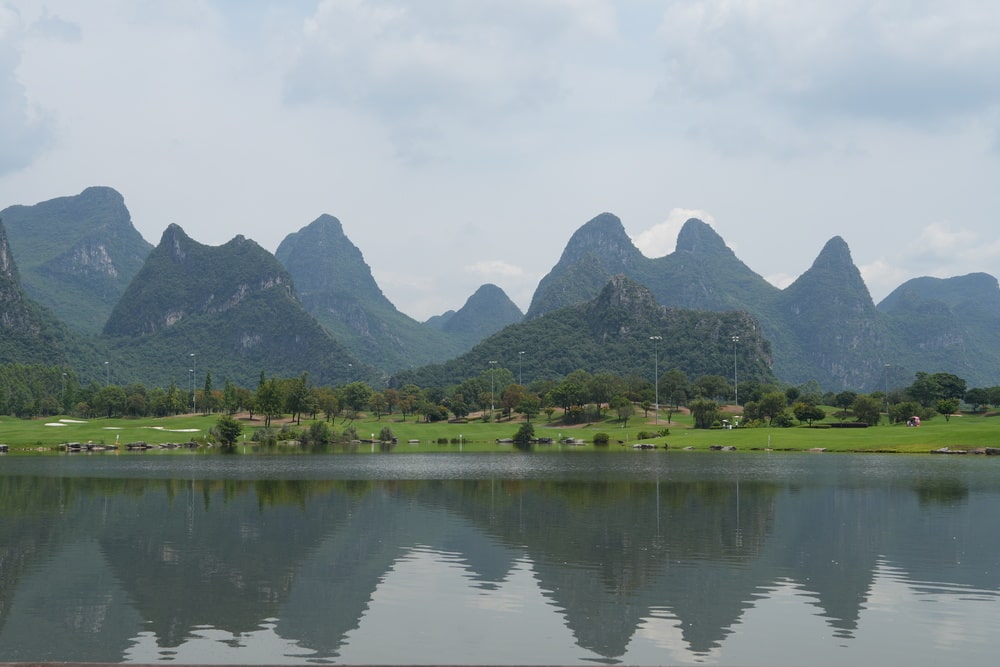 Park
Park
The next day was our first planned excursion. In the morning, after breakfast, a pre-arranged driver arrived at our hotel to take us on a journey of over two hours outside Guilin. He drove us to the Longji Terraced Fields — a stunning area of hills covered with rice paddies. We took a cable car up the mountain, and shortly after, an incredible view unfolded before our eyes. The entire mountainside had been transformed into terraces for rice cultivation, creating beautiful patterns. It almost looked like something out of Minecraft. At the top, there were several viewpoints and a few small souvenir shops. After soaking in the scenery, we began descending along a trail. We stopped at a mountainside restaurant for lunch. Afterwards, our guide allowed us to walk among the terraces. Once we had experienced all of this, we finally returned to the car at the bottom. We thought that was the end, but the driver had one more surprise in store. He took us to a tiny village nestled in the heart of the mountains, where locals also cultivate rice. The rice fields there weren't as impressive, but the village itself was charming. It had a new, spacious cultural center with beautiful views of the surrounding area, a glass observation deck, and a suspension bridge. It was a very peaceful and lovely place to live. We also had the chance to meet one of the local residents. After a short walk, we returned to the car and back to the hotel. We ordered dinner to the hotel via an app and went to bed, as another journey awaited us the next day.
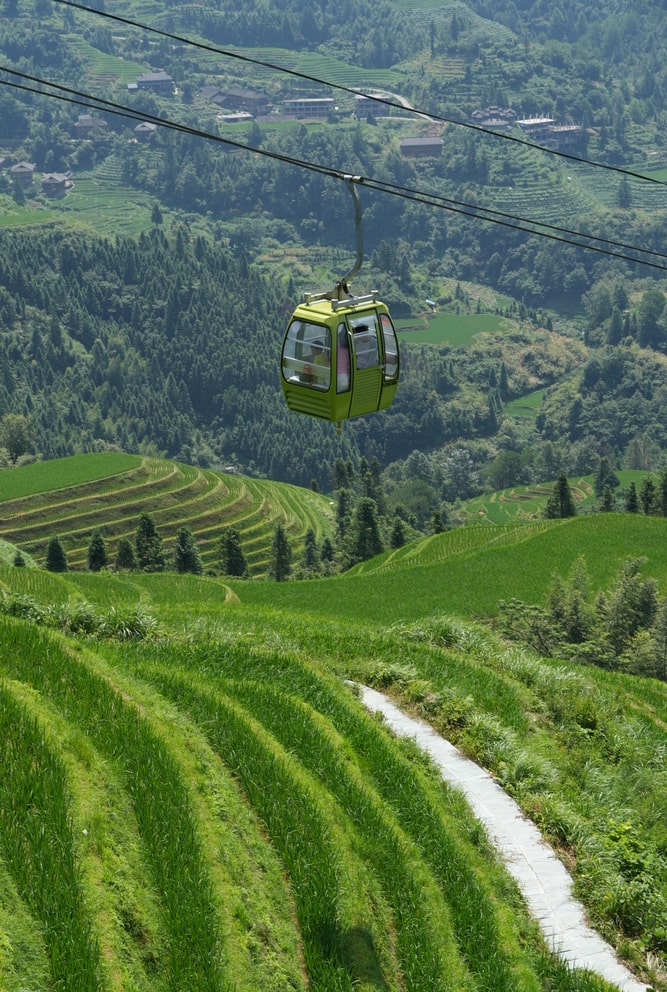
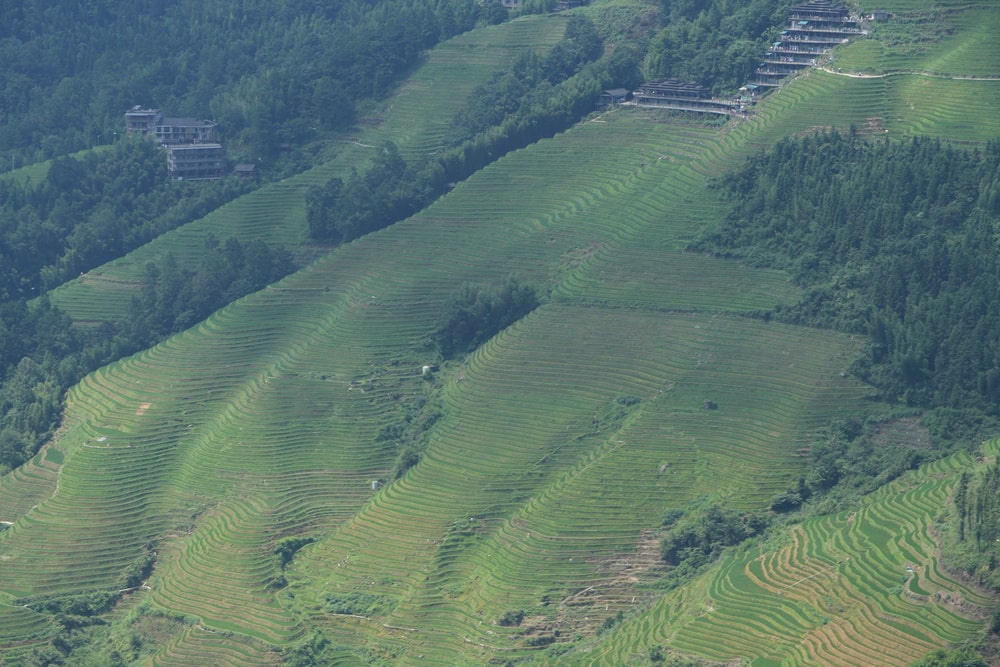
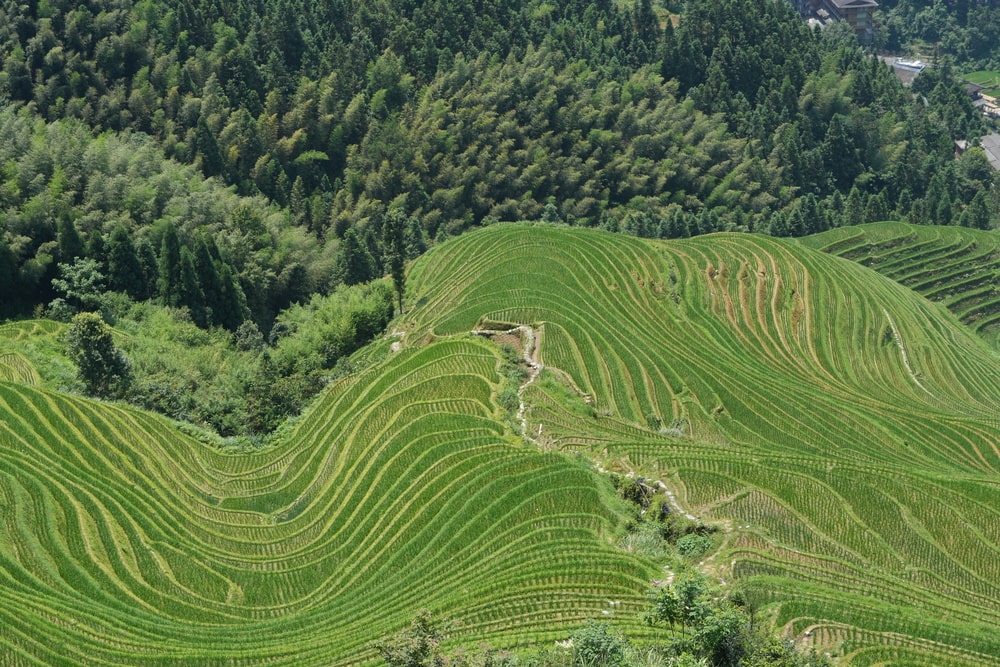
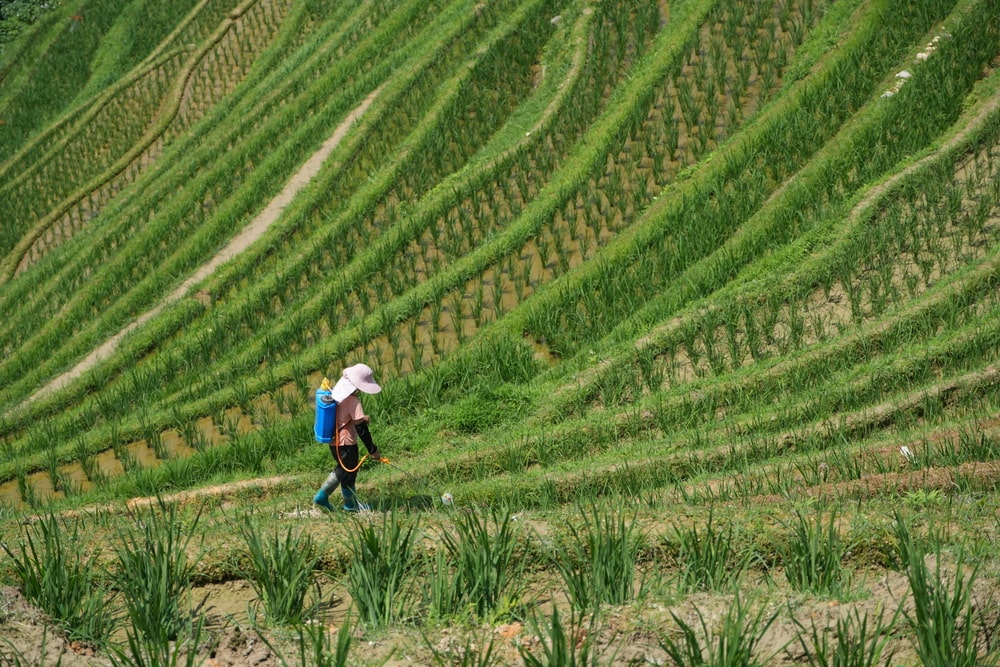


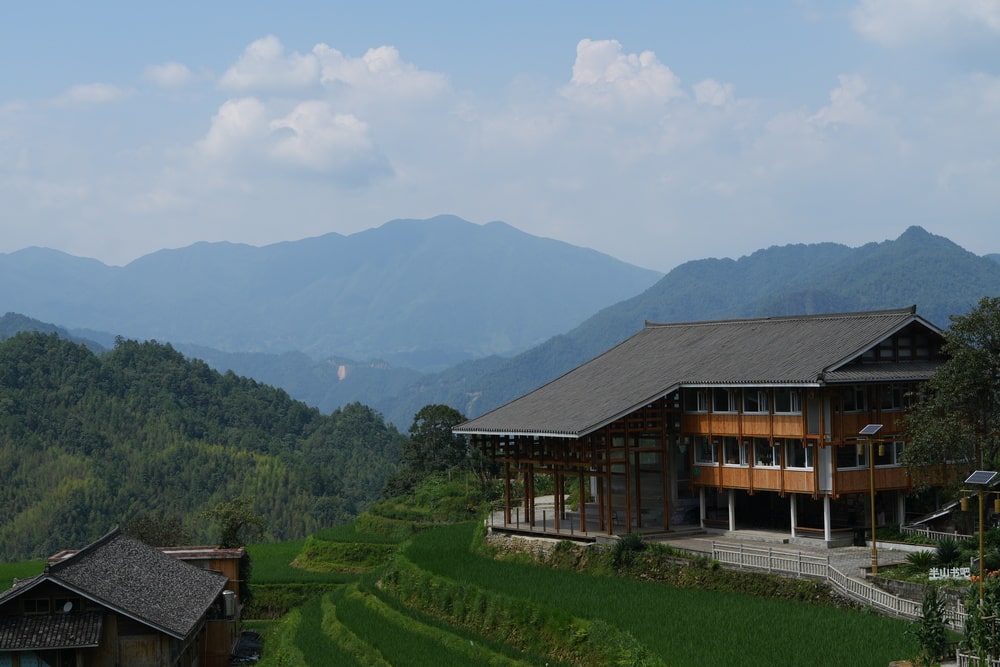 5) A girl taking photo with Agatka, 7) Cultural Center in the village
Our last day in Guilin began much like the previous one. In the morning, a driver picked us up and took us on a journey of over an hour to the ferry port on the Li River. There, we bought tickets for a cruise and boarded the boat. This is a very popular excursion in the area, lasting around four hours. The river flows slowly through the incredible mountains. I had never seen anything like it before — steep, vertical rock formations densely scattered across the landscape. It feels as if you are drifting through a forest of stones. The boat moves slowly and is very comfortable, with a rooftop deck and lunch included. The interior is air-conditioned, and there is plenty of space. The highlight of the trip is the view featured on the 20-yuan note. At that moment, everyone rushes to the roof to take photos. After four hours, we finally arrived at the village of Yangshuo. This smaller town is famous for being one of the main river ports. There are plenty of souvenir shops, a beautiful park with scenic paths, and many interesting restaurants. Yangshuo is also known for the traditional Chinese method of fishing with cormorants, where the bird's neck was tied so it couldn't swallow the fish, allowing the fisherman to retrieve it. Luckily, this technique is no longer practiced and exists today only as a cultural attraction. We wandered around the town for several hours, and after sunset, we took a long taxi ride back to Guilin. Exhausted, we immediately fell into bed and slept deeply.
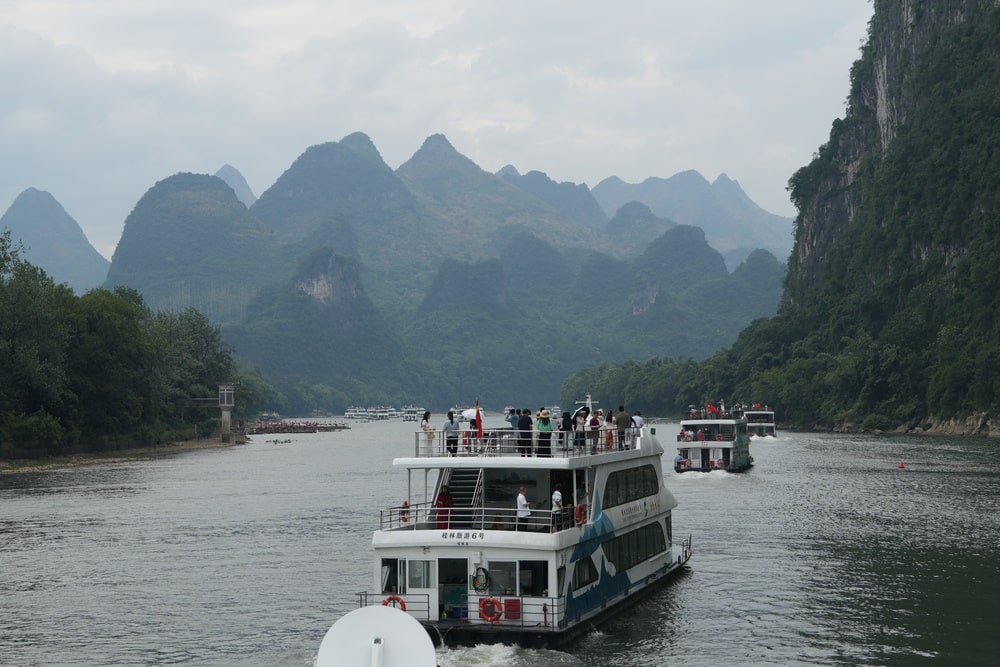
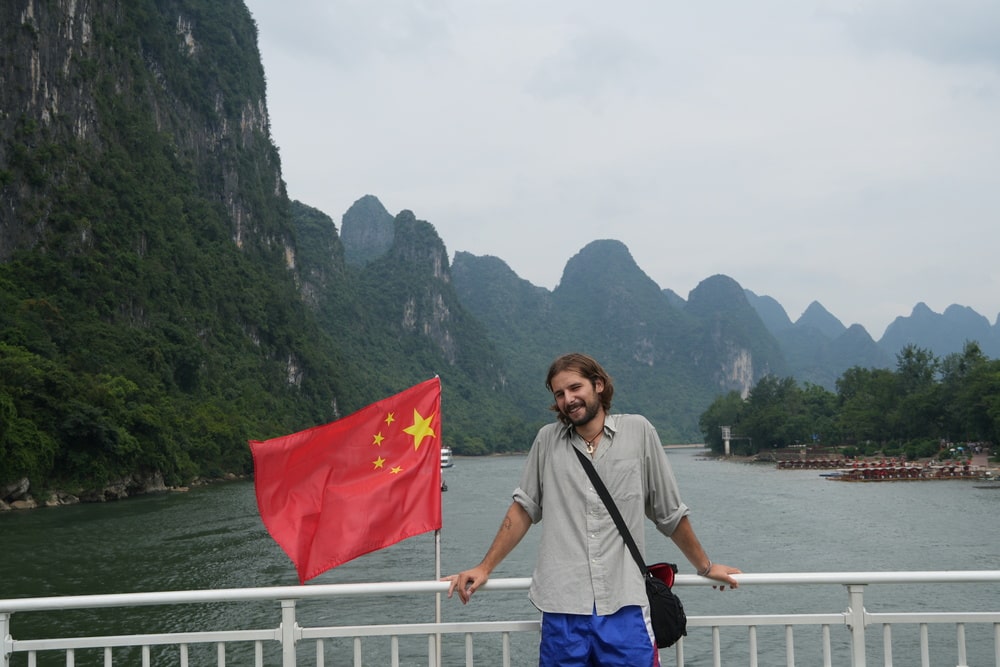
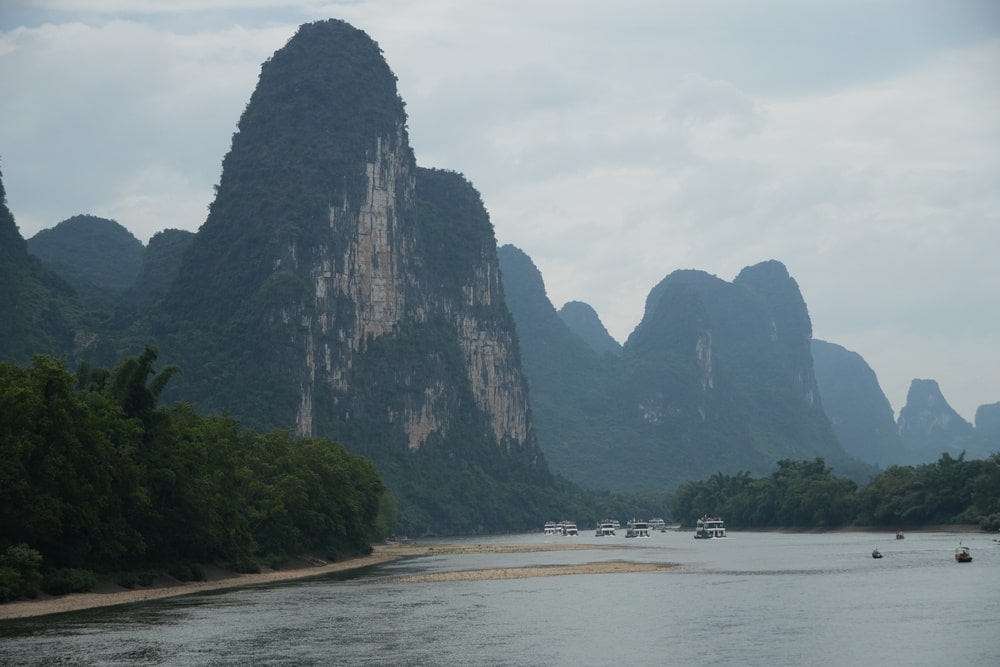
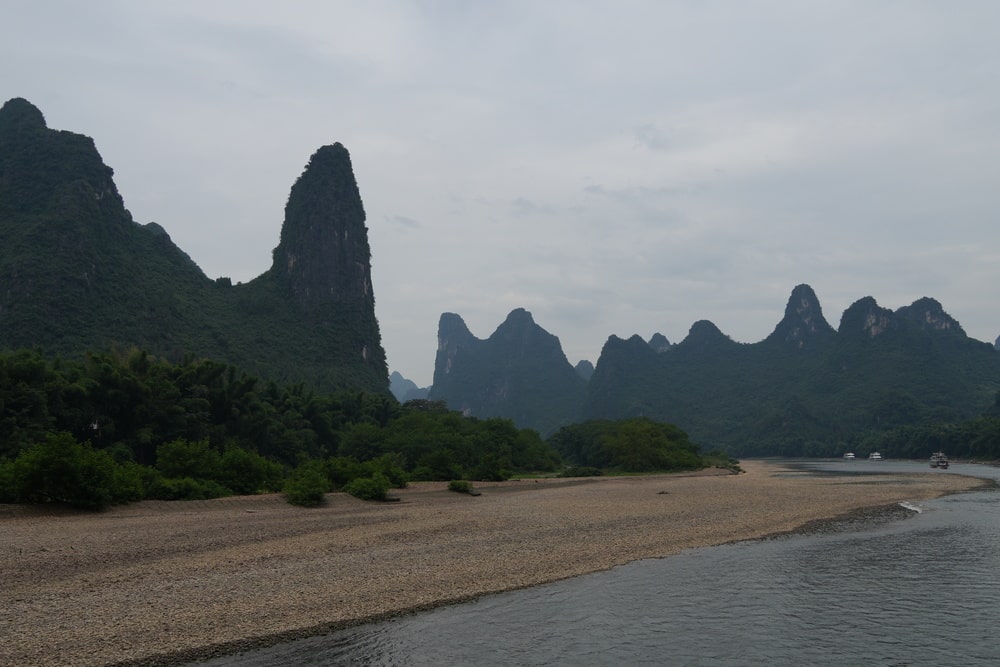
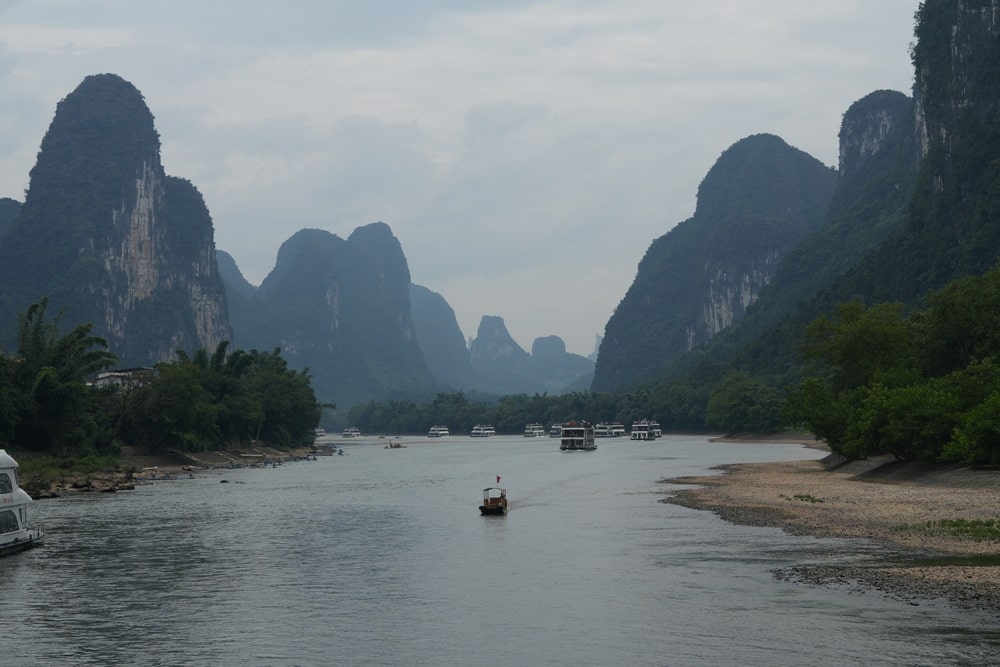
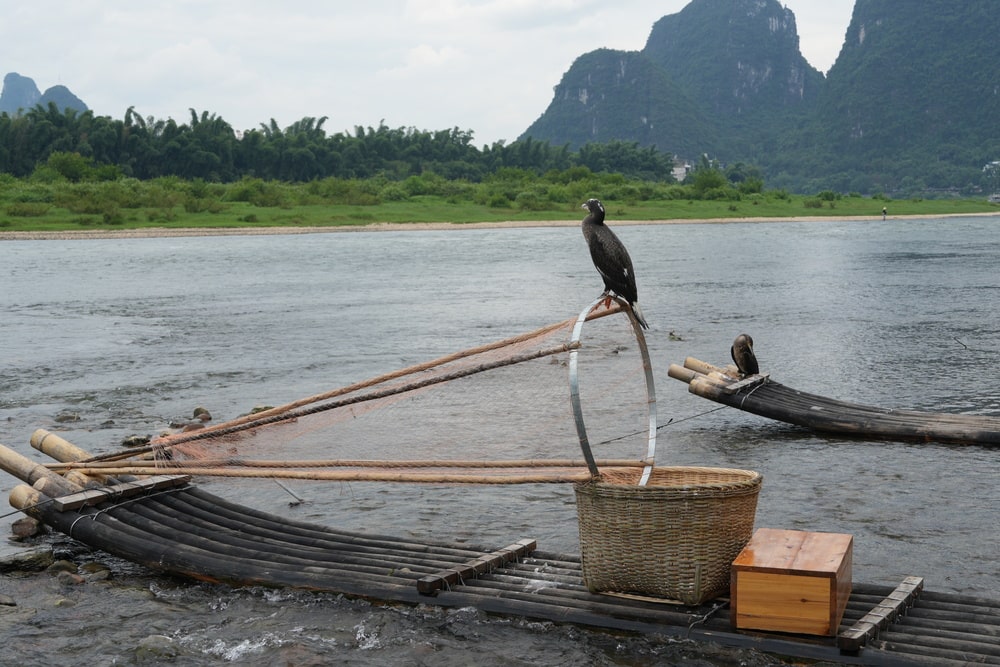
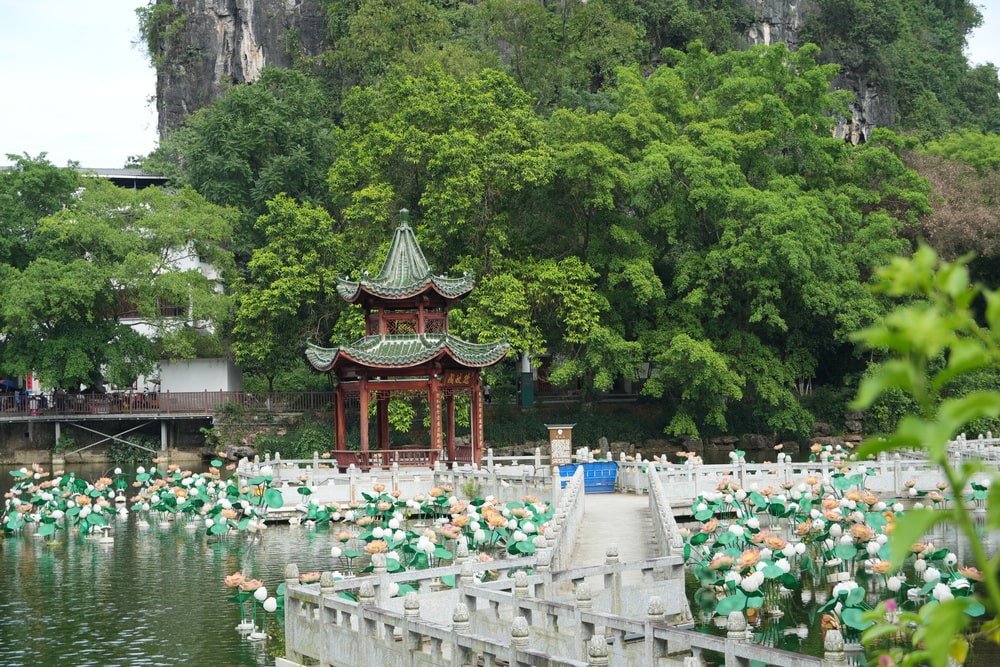 Li river cruise and Yangshuo
Last days in China
Finally, it was time to slowly start our journey back. After breakfast, we took a taxi to the train station, where our train was waiting. We were traveling directly back to Beijing, so it was going to be a loooong ride — exactly 11 hours. Fortunately, Chinese trains are very fast and comfortable, so we weren't too worried. Along the way, we were able to admire the changing landscapes of China as we moved north. We even passed through Wuhan, the city where COVID-19 first started. It was a strange feeling to be in the place where it all began, knowing how drastically the lives of billions of people were affected. Eventually, very late at night, after 11 p.m., we arrived in Beijing and went straight to the same hotel where we had stayed during the first days of our trip.
In Beijing, we still had one full day left, and we decided to visit the Summer Palace. It's somewhat similar to Łazienki Park in Warsaw. This was the place where the Emperor would spend the warmer months. There's a fairly large artificial lake modeled after the one in Hangzhou. It's so big that it's impossible to walk all the way around it. The palace complex has many atmospheric gardens, temples, and other old Chinese architectural structures. There's also a small island connected by a short bridge. You could easily spend an entire day there — and that's exactly what we did. In the evening, we went to a shopping mall to buy souvenirs and have something to eat. For a European, Chinese malls can easily be an attraction on their own — they're full of quirky shops you'd never see back home. Unfortunately, as usual, all the activity and walking completely wore us out, so we returned to our hotel room, exhausted once again.
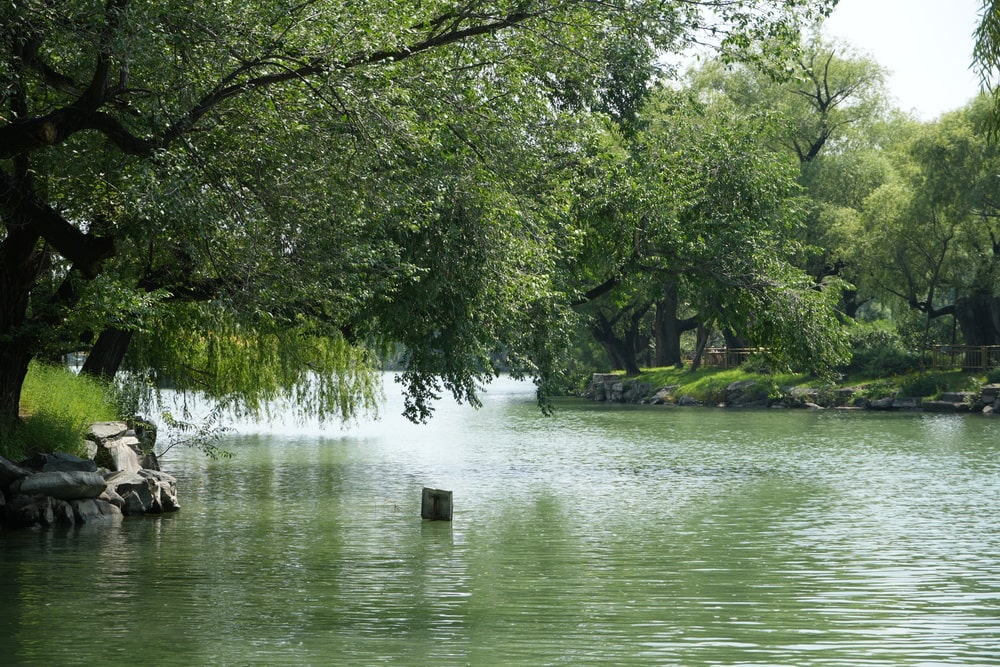
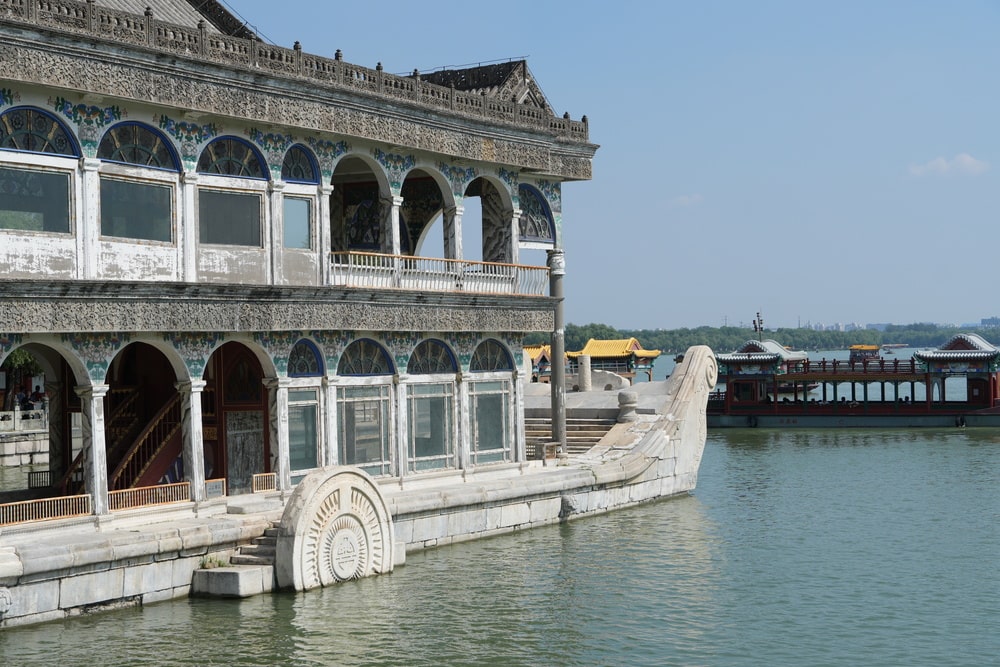
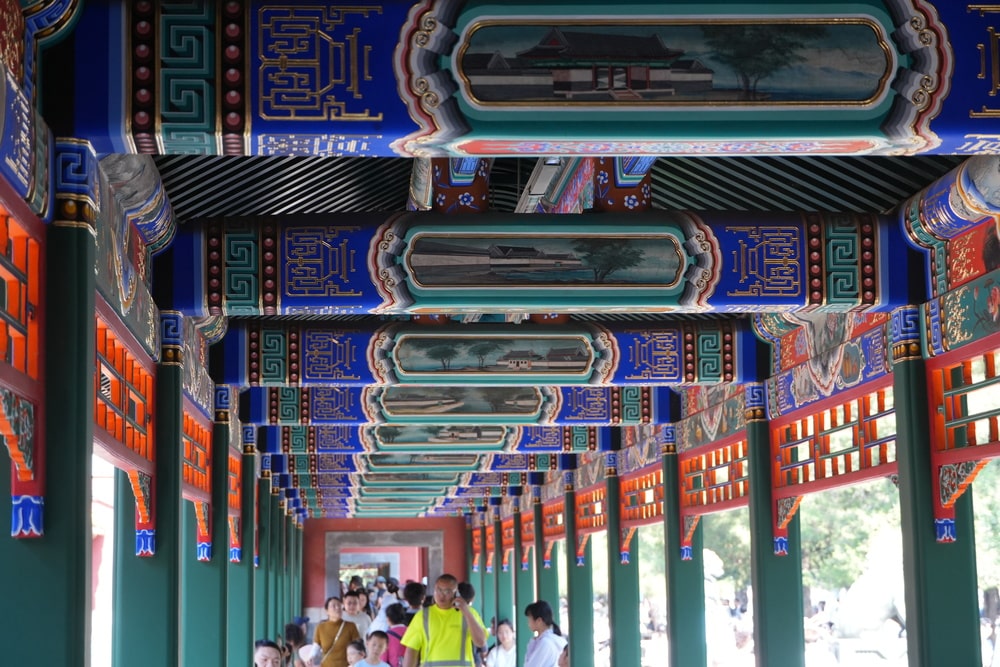
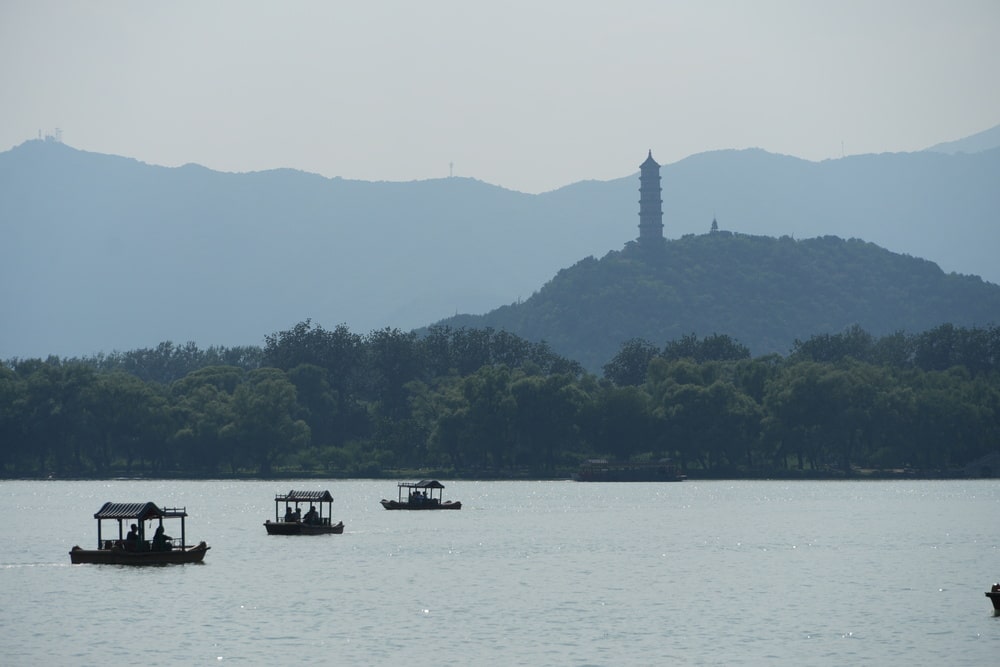
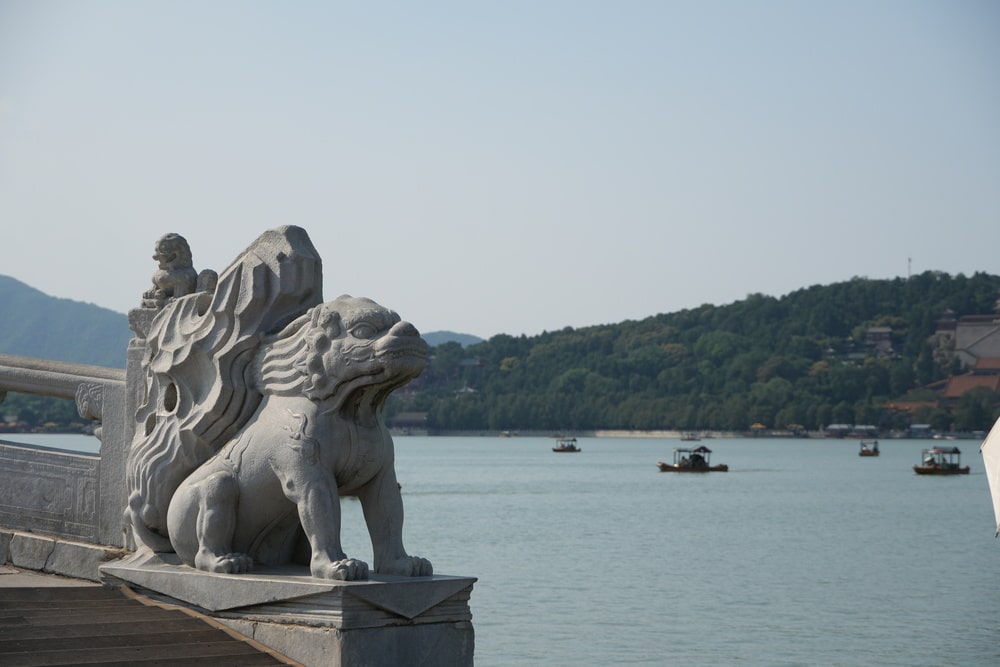
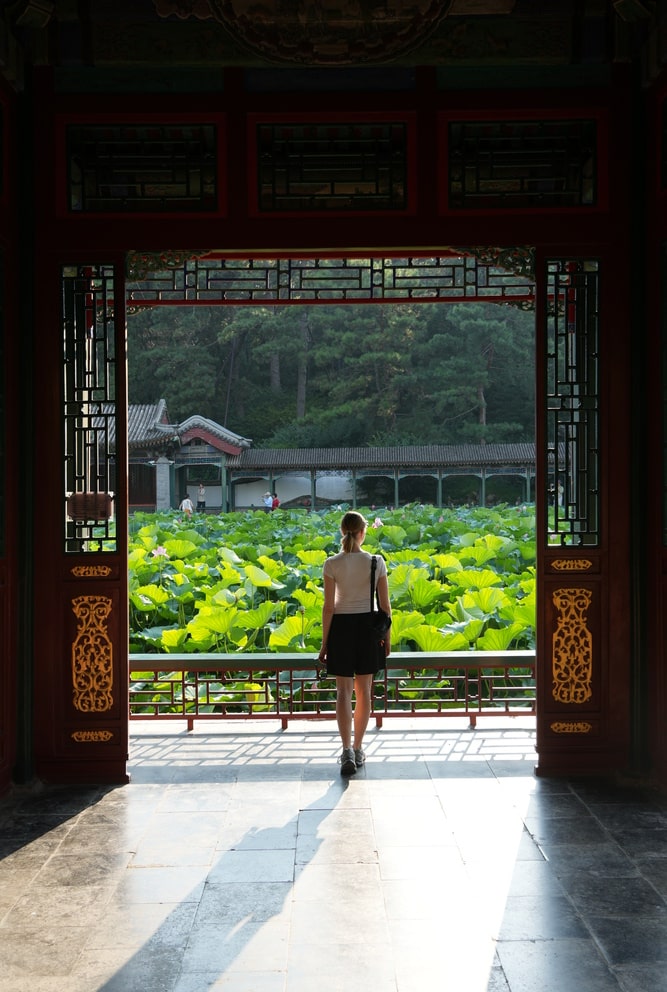
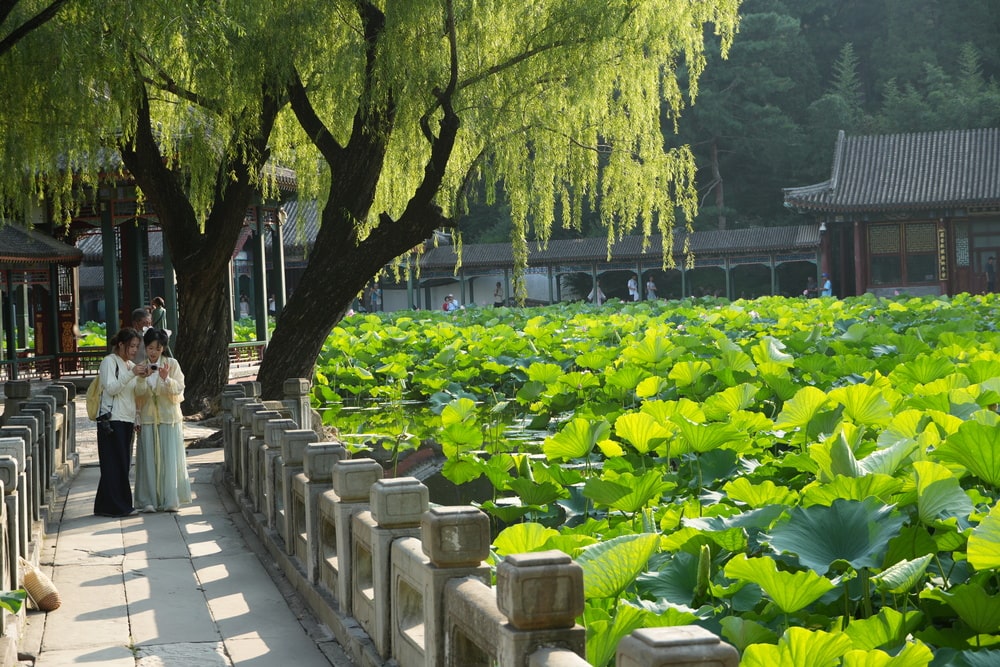 Summer Palace
And finally, the last day in China arrived. We were already exhausted and didn't have the energy to travel anywhere far. In the morning, we went only to Tiananmen Square, where we wanted to take a photo with the gate and Mao's portrait, but unfortunately, the crowds were so huge that we had to give up. Our second stop was a small street full of souvenirs, where we picked up some little gifts for our friends and family. Shortly after that, we went back to the hotel to collect our luggage and headed to the airport. Interestingly, at Beijing International Airport, there were hardly any people, while the domestic terminal was packed. A funny anecdote is that English is so poorly developed in China that I couldn't even communicate properly at the tourist information desk at the airport. After the simple airport procedures, we boarded our flight straight to Poland, where our family and friends were waiting for us.
Summary
The trip to China came unexpectedly, and what we encountered there was just as surprising. We had been expecting a calm, chill vibe in the parks, but instead, we experienced sensory overload from the loud and numerous locals, which made the trip quite mentally exhausting. Nevertheless, I am very grateful for it and had an amazing time. It was one of the most interesting experiences I've ever had. A completely different language, culture, and people. This is amplified by the isolation of Chinese society from Western civilization. It really is a very unique experience. I'm also happy that I could accompany Agatka on her first trip outside Europe and support her in every way I could. I feel like we shared truly wonderful moments together, and I can't wait for the next adventure.
Peace, Jakub
